Eyelid Surgery (Blepharoplasty) in Bellevue
Look Rested, Feel Like Yourself
Heavy, drooping eyelids can make you look tired, older, or even affect your vision — but a single outpatient procedure can change all of that. At Pacific Sound Plastic Surgery in Bellevue, Dr. Kristopher Day performs upper and lower blepharoplasty (eyelid surgery) with the precision that comes from a craniofacial surgery fellowship and over a decade of focused facial plastic surgery experience. Whether you are bothered by excess upper eyelid skin that gives you a fatigued appearance, under-eye bags that make you look older than you feel, or obstructing upper lid tissue that is narrowing your field of vision, Dr. Day tailors every eyelid procedure to your specific anatomy and goals. Pacific Sound Plastic Surgery is one of the highest-rated plastic surgery practices in Bellevue. Take the first step toward brighter, more refreshed eyes.
Double Board-Certified (ABPS + ABS)
Ivy League Trained
Highly Rated Bellevue Plastic Surgeon
Proudly Serving Bellevue, Seattle, Kirkland, Redmond, Mercer Island, Issaquah, Renton

What Is Eyelid Surgery (Blepharoplasty)?
Blepharoplasty — more commonly called eyelid surgery — is a surgical procedure that removes or repositions excess skin, muscle, and sometimes fat from the upper eyelids, lower eyelids, or both. It is one of the most frequently performed facial plastic surgery procedures in the United States, and for good reason: the eyes are the first feature most people notice, and even subtle changes in the eyelid area can dramatically refresh your overall appearance.
There are two primary types of eyelid surgery: upper blepharoplasty and lower blepharoplasty. Many patients choose to have both performed in the same surgical session, which Dr. Day can coordinate based on your individual anatomy and treatment goals.
Upper Blepharoplasty
Upper eyelid surgery addresses excess, heavy skin that hangs over the lid margin, making eyes appear smaller, tired, or older. In more advanced cases, this overhanging skin can physically obstruct the upper visual field — a condition that may qualify for insurance coverage (see Section 7B: Insurance Spotlight below). The procedure removes precisely calculated amounts of skin and occasionally a small amount of underlying muscle or orbital fat to create a defined, natural-looking upper lid crease.
Lower Blepharoplasty
Lower eyelid surgery targets the under-eye area, addressing puffiness caused by protruding fat pads, loose skin, and fine wrinkling that creates a perpetually fatigued or aged appearance. Dr. Day may use a transconjunctival approach (incision hidden inside the lower lid — no external scar) or a subtarsal transcutaneous approach (a fine incision placed just below the lower lash line in the lid’s natural skin crease), depending on the degree of skin laxity and the amount of fat repositioning needed.
Combined Upper & Lower Blepharoplasty
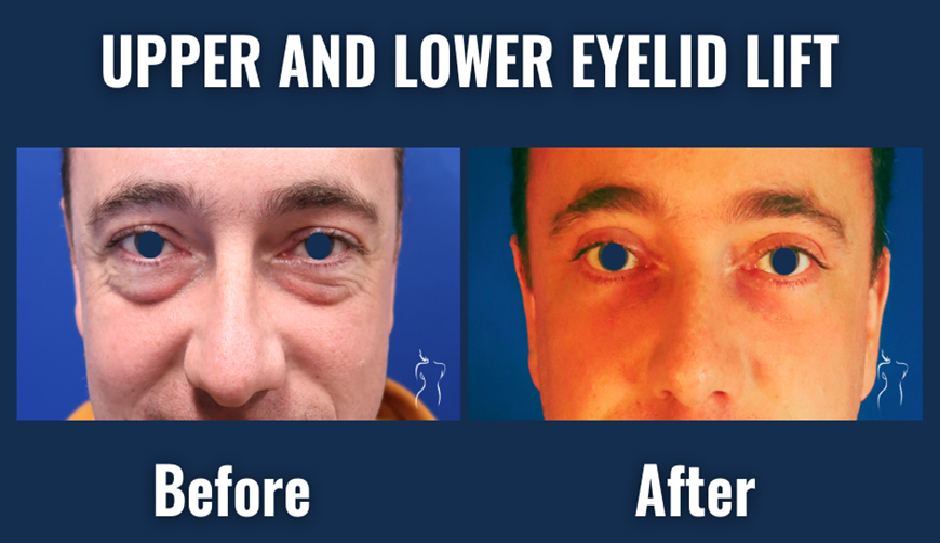
When both upper and lower lids are addressed at the same time, the result is a comprehensive, balanced eye rejuvenation. Many patients find that treating both lids simultaneously produces a more harmonious outcome than treating one area in isolation — and recovery timelines are similar whether one or both sets of lids are treated.
Benefits Of a Eyelid Surgery (Blepharoplasty)
Eyelid surgery delivers results that go beyond cosmetics. For many patients, the impact is both physical and emotional — a renewed sense of confidence, relief from visual obstruction, and the feeling that their outward appearance finally matches how young and energetic they feel on the inside.
Appearance Benefits
- Appears years younger without dramatic, obvious changes
- Eyes look more open, alert, and rested
- Reduces under-eye puffiness and “bags”
- Softens fine lines and crepe-like wrinkling around the eye
- Creates or restores a natural upper lid crease
- Improves symmetry between upper and lower lids
- Results blend seamlessly — most people will notice you look refreshed but won’t know why
Functional Benefits
- Improved peripheral and upper visual field when excess upper lid skin is obstructing vision
- Reduced headache or eyebrow strain from constantly lifting heavy lids
- Improved ease of applying eye makeup
- May qualify for medical insurance coverage if functional impairment is documented
What Eyelid Surgery Cannot Do
Eyelid surgery is not a brow lift and does not elevate a low or descending brow. If brow ptosis is contributing to your heavy upper lid appearance, Dr. Day will evaluate this during your consultation and may recommend combining blepharoplasty with a brow lift for the most complete result. Similarly, eyelid surgery does not address dark circles caused by pigmentation or vascular changes — though it can improve shadows caused by under-eye hollowing.
“Dr. Day performed two surgeries for me. Surgery can be scary, but both times he made sure to explain the procedure, the expected recovery, answer all questions, and put my mind at ease. My wife has seen my successes with Dr. Day, and is excited to become his patient as well.”
— Garrett S., Patient • Google Review
Am I a Good Candidate for a Eyelid Surgery (Blepharoplasty)?
The best candidates for blepharoplasty are in overall good health, have realistic expectations about what surgery can achieve, and are bothered by eyelid-related concerns that have not responded to non-surgical options. Dr. Day evaluates each patient individually — there is no single profile that defines a good candidate.
- Ideal Candidates
- You have excess upper eyelid skin that makes you look tired or older
- You have under-eye bags or puffiness caused by fat prolapse
- You are in good overall physical health with no uncontrolled systemic disease
- You are a non-smoker (or are committed to quitting at least 6 weeks before surgery)
- You have stable vision and have been evaluated by an ophthalmologist if needed
- You have realistic expectations — refreshed appearance, not a completely different face
- Upper eyelid skin is functionally obstructing your vision (may qualify for insurance)
- When to Consider Waiting
- You smoke and are unwilling to stop prior to and during recovery
- You have uncontrolled dry eye syndrome (discuss with Dr. Day — may require ophthalmology clearance)
- You are seeking this procedure primarily to look like a specific celebrity or alter your ethnic features
- You have had LASIK or other vision surgery (including retinal or corneal procedures) within the past 6–12 months — the combined effect of these procedures can lead to dry eye and, in rare cases, corneal injury
- You have serious cardiovascular disease, uncontrolled diabetes, or bleeding disorders
- You are pregnant or breastfeeding
- You have unrealistic expectations about the degree of change surgery can achieve
What About Ethnic Considerations?
Patients from Asian, Southeast Asian, and other backgrounds may seek eyelid surgery for very different reasons — to create a visible upper lid crease (double eyelid surgery) that is absent due to anatomy, rather than to remove excess skin. Dr. Day’s craniofacial surgery background and experience in periorbital anatomy allows him to approach these goals with appropriate sensitivity and precision. If you are considering double eyelid surgery or have specific concerns about preserving ethnic characteristics, please discuss these goals openly during your consultation.
Not Sure If You're a Candidate?
Schedule a consultation with Dr. Day to discuss your goals and options.
Your Eyelid Surgery (Blepharoplasty) Journey
Your Consultation with Dr. Day
During your initial consultation, Dr. Day will evaluate your upper and lower eyelid anatomy, including the amount of excess skin, the degree of fat prolapse, the position of your brow, and the condition of your lower lid support structures. He will discuss your goals, review your medical history, and answer all of your questions — including whether your situation might qualify for functional coverage through insurance. High-resolution photographs are taken to assist with surgical planning.
Before Surgery
- Pre-operative bloodwork and medical clearance (if required)
- Ophthalmology consultation recommended if you have pre-existing dry eye or Schirmer’s test abnormalities
- Stop blood thinners, aspirin, ibuprofen, herbal supplements, and others as directed
- Stop smoking a minimum of 6 weeks before surgery
- Arrange a responsible adult to drive you home and assist during the first 24 hours
Surgery Day
Eyelid surgery is performed on an outpatient basis under local anesthesia with IV sedation, or general anesthesia — Dr. Day will discuss the best approach for your comfort and the scope of your procedure. Upper blepharoplasty typically takes 45–60 minutes; lower blepharoplasty takes approximately 60–90 minutes; combined upper and lower eyelid surgery typically takes 2–3 hours. You return home the same day.
"Dr Day explained my procedure to me and scheduled the surgery as soon as possible. Thank you Dr Day."
— Curtis E., Patient • Google Review
Recovery Timeline
Days 1–3
What to Expect
Swelling, bruising, mild discomfort. Cold compresses recommended. Keep head elevated. Walking and light activity encouraged starting Day 1 — no grimace, grunt, strain, or sweat.
Days 3–5
What to Expect
Most patients return to desk work and light activity. Avoid screens excessively.
Week 1–2
What to Expect
Sutures removed (if non-dissolving). Bruising fading. Desk work and sedentary activities resume. Avoid high-intensity exertion — the guideline is no grimace, grunt, strain, or sweat. Light walking and errands are fine.
Week 2–4
What to Expect
Most social and professional activities resume. Exertional activity restarts at approximately 50% of your pre-operative baseline, increasing by about 5% per day. Light exercise such as walking is encouraged.
Month 1–3
What to Expect
Residual swelling continues to resolve. Scars begin to fade.
Month 6–12
What to Expect
Final results visible. Scars continue to mature and fade. Upper lid incisions hidden within the natural lid crease are typically well-concealed; lower lid incisions, when present, settle below the lash line.
Can Upper Eyelid Surgery Be Covered by Insurance?
In some cases, yes — upper blepharoplasty may be covered by medical insurance when excess upper eyelid skin is documented to obstruct the superior visual field. This is classified as a functional rather than purely cosmetic procedure, which changes how insurers categorize it.
Who May Qualify?
Insurance coverage for upper blepharoplasty generally requires that excess upper lid skin physically impairs your vision when looking straight ahead or upward. The typical qualification process involves:
- A formal visual field test (often administered by an ophthalmologist) demonstrating peripheral vision loss
- External photographs documenting significant skin overhang beyond the lid margin
- A letter of medical necessity from your treating physician
- Submission of documentation to your insurance carrier for pre-authorization
What Results Can I Expect from a Eyelid Surgery (Blepharoplasty)?
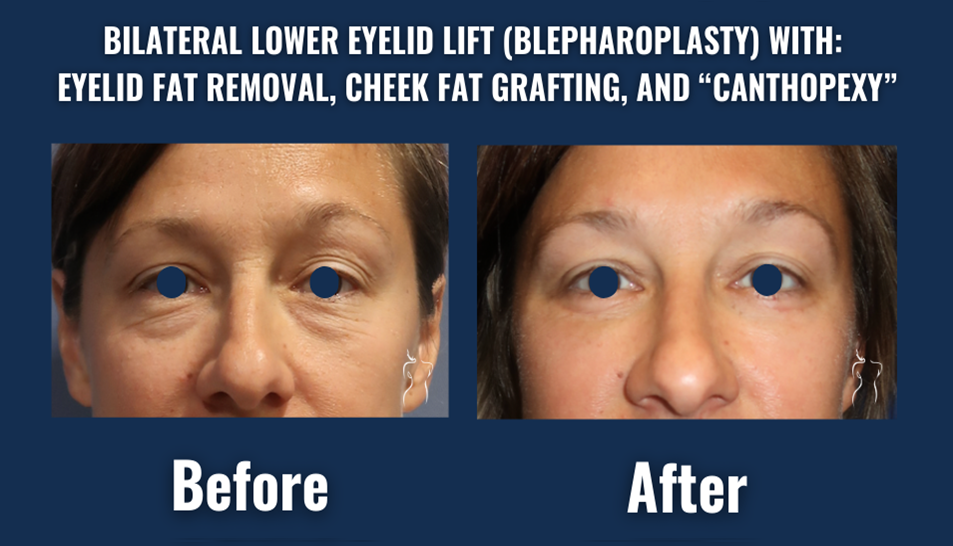
The results of blepharoplasty are among the most natural-looking of any facial procedure. Unlike more dramatic interventions, eyelid surgery refreshes and opens the eye area without creating an “operated” appearance. Most patients find that friends, colleagues, and family comment that they look well-rested or younger — without being able to pinpoint exactly what has changed.
Immediate Post-Operative Period
Immediately after surgery, significant swelling and bruising around the eye area is normal and expected. Do not judge your results during this phase. The eyes may feel tight, dry, or sensitive to light. Most patients are pleasantly surprised at how quickly initial swelling begins to reduce — typically within the first 5–7 days.
Short-Term Results (Weeks 1–6)
As swelling subsides, you will begin to see the emerging shape of your new eyelids. Residual firmness and minor asymmetry are normal during this period as the tissues continue healing. Incision lines will be pink or slightly raised — this is part of the normal scar maturation process.
Final Results (Months 3–12)
Final results are typically fully visible between three and six months after surgery, with continued refinement possible up to one year. Upper lid incisions are positioned within the natural lid crease where they are typically well-concealed, and lower lid incisions (when present) sit just below the lash line where they are meticulously managed for the most subtle outcome.
Longevity of Results
Blepharoplasty produces long-lasting results. While the procedure does not stop the natural aging process, it effectively “turns back the clock” on the eye area — typically by 10–15 years. A patient in their mid-60s who looks refreshed and youthful after surgery may continue to look that way for many years; time still marches forward, but the perceived effects of aging around the eyes have been meaningfully reversed. Revision blepharoplasty is uncommon — most patients enjoy their result for the long term without any further intervention.
"I don’t even really have the words to describe what Dr. Day has done for me. Transformed me into the person I want to be is really the best description. It was like he took the idea out of my head and just made it happen. He was professional, the service was quick, but thorough with great customer service. You feel like a member of the family, not his portfolio..."
— AJ B., Patient • Google Review
Eyelid Surgery Cost in Bellevue
What’s Included in Your Investment
Eyelid surgery pricing is always personalized to your anatomy and goals. The largest factor in determining your procedure cost is the time required in the operating room — our facility fee covers anesthesia, equipment, surgical staff, and post-operative recovery. Additional factors that influence the total investment include:
Procedure | Starting Investment |
|---|---|
Upper Blepharoplasty (both upper lids) | Starting from $4,000 |
Lower Blepharoplasty (both lower lids) | Starting from $6,500 |
Combined Upper & Lower Blepharoplasty | Starting from $8,500 |
What’s Included in Your Eyelid Surgery Investment
Your surgical fee covers all of the following at Pacific Sound Plastic Surgery:
- Surgeon's fee
- Facility / operating room fee
- Anesthesia (administered by a board-certified anesthesiologist or certified registered nurse anesthetist)
- Enhanced Recovery After Surgery medication (Exparel)
- Cosmetic surgery insurance coverage (Cosmetasure)
- High-end compression garment (Isavella)
- High-end scar ointment (Biocorneum)
- Swelling and bruising ointment (Arnica)
- Clara Recovery Supplements
- Chlorhexidine Anti-Septic Scrub Cloths
- Post-operative recovery and follow-up care
Insurance Considerations
Upper blepharoplasty performed to correct a documented functional visual impairment may be covered in full or in part by your medical insurance. Our office can assist with the pre-authorization process. Lower blepharoplasty is considered cosmetic and is not covered by insurance.
Financing Options
Pacific Sound Plastic Surgery accepts CareCredit (6-month financing) and Alphaeon Credit, two of the most widely used healthcare financing programs. Both allow patients to begin their journey without paying the full cost upfront.
Starting from $4,000
Pricing is discussed in full detail during your consultation so there are no surprises. Call (425) 818-8991 to get started.
Why Choose Dr. Kristopher Day for Your Eyelid Surgery (Blepharoplasty)?
Not all plastic surgeons approach eyelid surgery the same way — and for a procedure that works in such a delicate, high-visibility area, the surgeon’s training and experience matter enormously.
Craniofacial Fellowship Training
Dr. Day completed a craniofacial surgery fellowship — an advanced, subspecialty level of training beyond standard plastic surgery residency that only a small number of surgeons pursue. The periorbital region (the area surrounding the eyes) is a core focus of craniofacial surgery training, giving Dr. Day an exceptionally thorough understanding of eyelid anatomy, orbital structure, and the complex interactions between the lid, brow, midface, and lacrimal system. He is Ivy League trained, and this depth of anatomical knowledge translates directly into more precise, safer, and more nuanced results.
Double Board-Certified
Dr. Day holds dual board certification from the American Board of Plastic Surgery (ABPS) and the American Board of Surgery (ABS) — the highest credentialing standard in the field. Both boards require rigorous written and oral examination and ongoing continuing medical education.
Individualized, Patient-First Approach
Pacific Sound Plastic Surgery is a boutique practice, which means Dr. Day personally performs every procedure and personally manages each patient’s care from consultation through recovery. You are not one of dozens of identical patients — your anatomy, your goals, and your concerns receive his individual attention.
Consistently Highest-Rated in Bellevue
Pacific Sound Plastic Surgery is one of the highest-rated plastic surgery practices in Bellevue, with one of the highest patient satisfaction scores in the area. Patients consistently highlight Dr. Day’s thoroughness during consultations, his willingness to answer questions in detail, and the quality of his surgical results.
Surgical Facilities
Dr. Day operates exclusively at accredited, AAAHC/AAAASF/Medicare-certified, fully-equipped surgical facilities — including Swedish Medical Center, Virginia Mason Franciscan Health, and Carillon Point Surgery Center, Sound Plastic Surgical Center





Conveniently Located for Eastside Families
Pacific Sound Plastic Surgery is centrally located in downtown Bellevue, making Dr. Day’s fellowship-trained expertise accessible to families throughout Bellevue and the greater Eastside — without the stress of navigating Seattle traffic. Our patients enjoy a private, boutique surgical experience with on-site validated parking, just minutes from the communities they call home.
Seattle
~15 minutes
World-class plastic surgery results without the downtown Seattle parking hassle. A quick drive across SR-520 or I-90 to our private Bellevue office.
Kirkland
~10 minutes
Just minutes from downtown Kirkland and the Juanita waterfront via I-405 or surface streets.
Redmond
~10 minutes
Convenient for the Redmond tech community via SR-520 or surface streets.
Mercer Island
~10 minutes
A quick drive across I-90. Our discreet, private environment is ideal for discerning Mercer Island residents.
Issaquah
~10 minutes
Convenient for Issaquah Highlands and Gilman Village area families via I-90.
Renton
~5 minutes
Easy access from Renton and the Landing via I-405 North. Boutique care and personalized attention just minutes away.
Frequently Asked Questions
Will eyelid surgery leave visible scars?
For upper blepharoplasty, the incision is placed precisely within the natural upper lid crease and is meticulously managed to heal as discreetly as possible. While all surgery produces a scar, upper lid incisions typically become well-concealed within the natural crease. Lower blepharoplasty incisions placed via a subtarsal transcutaneous approach sit just below the lower lash line and continue to mature over many months. For lower lids treated via the transconjunctival approach, there is no external incision at all. No scar is ever invisible — but Dr. Day’s technique is designed to produce the most subtle, well-positioned scars possible.
Will I look natural after eyelid surgery — or will people know I've had work done?
Blepharoplasty performed by an experienced surgeon should make you look rested and refreshed — not “operated on.” The goal is for your results to look like a better, more energetic version of yourself. Dr. Day takes a conservative, individualized approach to ensure results are harmonious with your overall facial anatomy.
Can upper eyelid surgery be covered by insurance?
Insurance coverage for upper blepharoplasty generally requires that excess upper lid skin physically impairs your vision when looking straight ahead or upward. Importantly, the qualification process begins before your first consultation with Dr. Day — patients cannot self-refer for insurance consideration. The typical qualification path involves:
– Referral from your primary care doctor, with a note documenting visual obstruction due to dermatochalasis
– A “taped visual field test” — typically performed by an optometrist or ophthalmologist — documenting peripheral vision loss
– External photographs documenting significant skin overhang beyond the lid margin
– Submission of documentation to your insurance carrier for pre-authorization (typically 4–6 weeks)
Once these requirements are met, our office can assist with the pre-authorization processing. Lower blepharoplasty is virtually never covered by insurance and is, in most circumstances, not even submittable for consideration for coverage.
Can I have eyelid surgery and a brow lift at the same time?
Yes — combining procedures is common when brow descent is contributing to the appearance of heavy upper lids. Dr. Day will assess your brow position during consultation and will recommend whether a combined approach would produce a better outcome for you. Treating both areas simultaneously avoids a second recovery and often produces more balanced results.
How long will my results last?
Blepharoplasty produces long-lasting structural changes that effectively “turn back the clock” on the eye area — typically by 10–15 years. While the natural aging process continues, the perceived rejuvenation of the eye area can endure for many years. Revision surgery after blepharoplasty is uncommon.
Can eyelid surgery be combined with other facial procedures?
Yes. Common combinations include brow lift, facelift, laser skin resurfacing, and injectables. Dr. Day will discuss which combinations make sense for your goals and whether simultaneous or staged procedures are most appropriate.
What is the difference between upper and lower blepharoplasty?
Upper blepharoplasty addresses excess skin and occasionally underlying fat in the upper lid area — typically to remove hooding and create a more open, alert eye. Lower blepharoplasty addresses under-eye puffiness, loose skin, and fine wrinkling caused by fat prolapse and skin laxity in the lower lid area.
What is the transconjunctival approach to lower blepharoplasty?
The transconjunctival approach places the incision on the inside of the lower lid (the conjunctiva), leaving no visible external scar. It is best suited for patients with good lower lid skin tone and primarily need fat repositioning or removal. For patients with significant lower lid skin laxity, an external (subtarsal transcutaneous) approach may be more appropriate.
How do I prepare for eyelid surgery?
Key preparation steps include stopping blood thinners, aspirin, and anti-inflammatory medications as directed; quitting smoking at least 6 weeks before surgery; arranging for a driver and caregiver for the first day; and filling prescriptions in advance. Dr. Day’s team will provide a comprehensive pre-operative checklist at your appointment.
What are the risks of blepharoplasty?
Eyelid surgery is considered safe when performed by a qualified, experienced surgeon, but as with any surgical procedure, risks exist. These include temporary dry eye, asymmetry, infection, scarring, ectropion (lower lid drooping), and — as a textbook risk of any eyelid procedure — blindness. Blindness is exceedingly rare and has not occurred in Dr. Day’s practice, but it is a recognized risk inherent to the procedure that every patient deserves to understand. Dr. Day will discuss all risks and how his technique minimizes them during your consultation.
When can I wear makeup after eyelid surgery?
Most patients can resume eye makeup after approximately 2 weeks, once incisions are well healed. Dr. Day’s team will provide specific guidance based on your individual healing progress.
Schedule Your Eyelid Surgery (Blepharoplasty) Consultation
You deserve to look as rested and energetic as you feel. Dr. Day and the Pacific Sound team create personalized treatment plans tailored to your individual anatomy and goals.