Jaw Reduction Surgery in Bellevue
Precision Jawline Reshaping by a Craniofacial Expert
For patients seeking a more refined, balanced facial profile, jaw reduction surgery and genioplasty offer transformative results that go far beyond what non-surgical treatments can achieve. At Pacific Sound Plastic Surgery in Bellevue, Dr. Kristopher M. Day, MD, FACS — one of the only craniofacial fellowship-trained plastic surgeons in Bellevue — approaches every jaw procedure with a level of anatomical precision reserved for true bone-level specialists. Whether you’re addressing a prominent jawline, chin asymmetry, or an imbalanced lower face, Dr. Day personalizes every plan to your unique facial structure, goals, and long-term harmony.
Double Board-Certified (ABPS + ABS)
Ivy League Trained
Highly Rated Bellevue Plastic Surgeon
Proudly Serving Bellevue, Seattle, Kirkland, Redmond, Mercer Island, Issaquah, Renton

What Is Jaw Reduction Surgery?
Jaw reduction surgery and genioplasty are surgical procedures that reshape the jawbone and chin to create a more balanced, proportionate lower face. Unlike dermal fillers or Kybella, which require ongoing treatments and offer temporary changes, reduction genioplasty and jaw reduction surgery produce lasting structural results. Patients can expect their new facial contour to remain stable over time, without the routine maintenance non-surgical treatments require.
Dr. Day performs two primary approaches to jaw and chin reshaping, often in combination, depending on each patient’s anatomy and goals:
Sliding Genioplasty (Bone Repositioning)
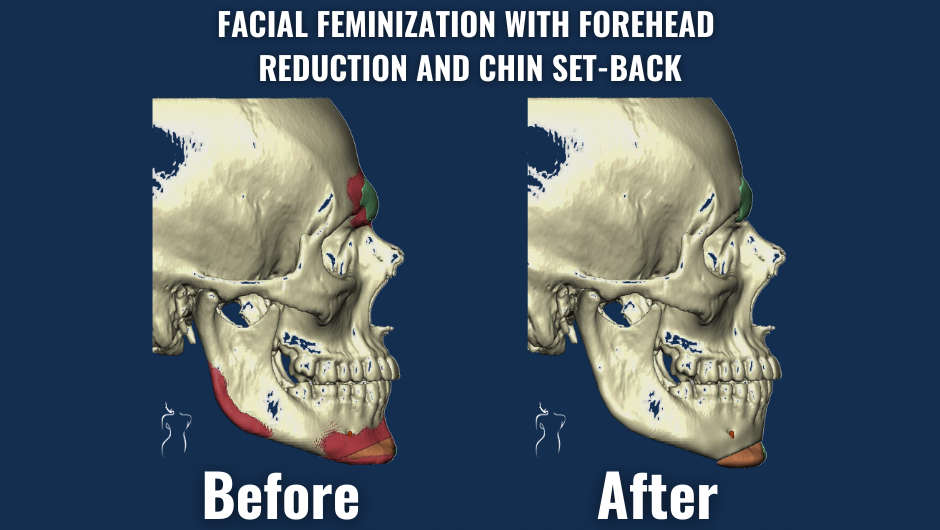
The sliding genioplasty is widely considered the gold standard for chin surgery because of its versatility and permanence. During this procedure, Dr. Day makes a precise horizontal cut in the chin bone (osteotomy) and repositions it — forward, backward, upward, downward, or side-to-side — to achieve optimal facial balance. The repositioned segment is secured with titanium fixation hardware that remains permanently in place. Because the bone itself is moved rather than augmented, the result integrates naturally with surrounding tissue over time.
This approach is particularly well-suited for patients with a significantly recessed or protruding chin, facial asymmetry, or those who require multi-dimensional repositioning. Only surgeons with advanced craniofacial training — like Dr. Day — routinely perform sliding genioplasty as a primary technique rather than a last resort.
Mandibular Angle Reduction
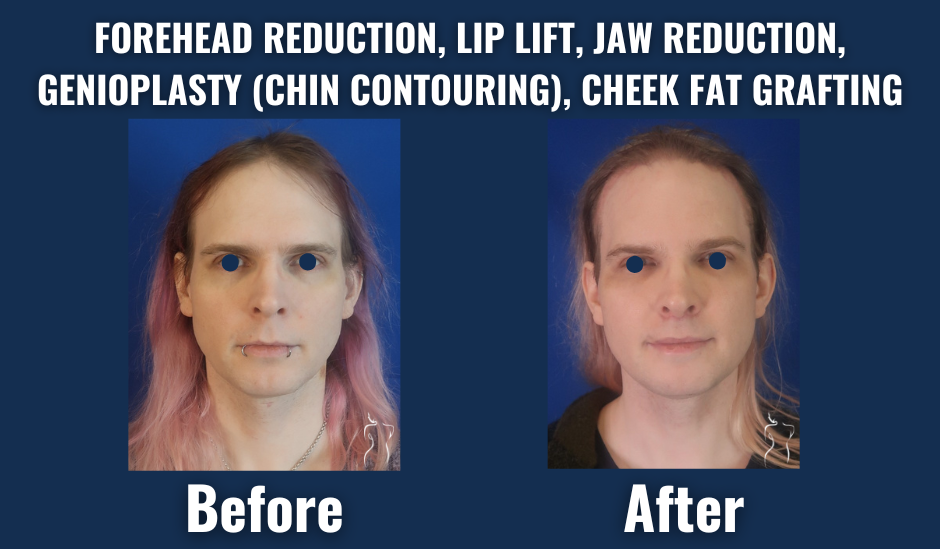
Some patients — particularly those seeking facial feminization or a slimmer lower face — request reduction of prominent mandibular angles (the back corners of the jawline). This bone-level procedure requires precise surgical technique and extensive knowledge of the facial nerve and surrounding anatomy. Dr. Day’s craniofacial fellowship training makes him uniquely qualified to perform mandibular angle reduction safely and with consistent aesthetic results.
These procedures can be performed individually or in combination with rhinoplasty, facelift, or cheek augmentation to address overall facial harmony in a single surgical session.
Long Curved Inferior Margin Mandibular Ostectomy
The long curved inferior margin mandibular ostectomy is an advanced technique used when patients seek comprehensive lower-face reduction beyond the mandibular angles alone. Dr. Day removes a long, curved segment along the inferior border of the mandible — extending forward from the angle toward the chin — producing a more refined, slimmer jawline contour viewed from the front and below. This approach is well-suited for patients with a heavy or broad lower jawline along its entire length, and it requires the bone-level surgical experience that craniofacial fellowship training provides.
Benefits of Jaw Reduction Surgery
Patients who undergo jaw reduction surgery or genioplasty with Dr. Day commonly report improvements that extend well beyond the physical:
Aesthetic Benefits
- A more balanced, proportionate lower face — the chin, jawline, and midface in harmony
- Slimmer, more refined facial silhouette when viewed from the front and side
- Elimination of a protruding chin or prominent angular jawline that has caused self-consciousness
- Correction of facial asymmetry that is difficult or impossible to address non-surgically
- Improved facial feminization — particularly for patients seeking a softer jaw contour
- Enhanced overall facial harmony that makes other features appear more refined
Functional Considerations
- Correction of bite issues that contribute to jaw discomfort (in select cases, coordinated with an oral surgeon)
- Reduction of jaw tension or TMJ-related strain in specific anatomical cases
- Improved comfort with chewing in patients with significant bony prominences
Long-Term Value
Unlike dermal fillers or Kybella, which require ongoing treatments and offer temporary changes, genioplasty and jaw surgery produce permanent structural results. Patients can expect their new facial contour to maintain its shape as they age, without the need for repeat procedures.
Am I a Good Candidate for Jaw Reduction Surgery?
The best candidates for jaw reduction surgery and genioplasty are adults in good overall health who are bothered by the appearance of their lower face and have realistic expectations about surgical outcomes. During your consultation, Dr. Day evaluates your facial anatomy, bone structure, and overall proportions to determine the safest and most effective approach.
- Ideal Candidates
- Healthy adults with fully developed facial bones (typically 18+)
- Concerned about a prominent, protruding, or recessed chin
- Bothered by a wide or angular jawline that feels inconsistent with your overall appearance
- Experiencing facial asymmetry in the lower face or chin
- Seeking facial feminization through jawline refinement
- Non-smokers, or willing to stop smoking at least 4 weeks prior to surgery
- When to Wait
- Facial bones are still developing (typically under age 18 — except in specific clinical circumstances)
- Active infection, skin condition, or illness near the surgical site
- Uncontrolled medical conditions (diabetes, bleeding disorders, cardiac issues)
- Unrealistic expectations — expecting to look like a specific person or celebrity
- Currently pregnant or breastfeeding
- Recent significant weight changes — ideally at stable weight for 6+ months
Not Sure If You're a Candidate?
Schedule a consultation with Dr. Day to discuss your goals and options.
Your Jaw Reduction Surgery Journey
Step 1: Your Personal Consultation
Every jaw surgery journey at Pacific Sound begins with a thorough, unhurried consultation with Dr. Day personally. He will evaluate your facial proportions, jaw bone anatomy, skin quality, and occlusion (bite). For most patients, this includes a review of facial photographs from multiple angles. Dr. Day will explain your options — genioplasty, chin implant, or mandibular reduction — and help you understand the realistic outcomes of each approach for your specific anatomy.
Step 2: Pre-Surgical Planning & Preparation
Once you decide to move forward, the practice coordinates your pre-operative labs, medical clearances, and pre-surgical instructions. You’ll receive a comprehensive guide covering medications to pause (including blood thinners and NSAIDs), dietary preparation, and what to arrange at home for your recovery period. A soft-food shopping list is provided well in advance.
Step 3 — Day of Surgery
Jaw reduction surgery and genioplasty are performed under general anesthesia as outpatient procedures at one of Dr. Day’s accredited surgical facilities. Procedure time is typically 1.5–3 hours depending on the technique(s) performed. For reduction genioplasty and mandibular angle reduction, incisions are placed entirely inside the mouth. There are typically either no visible external scars or discreet, concealed scars. Dr. Day will review incision placement specific to your anatomy and surgical plan during your consultation.
"Doctor day is a very experienced cranial facial and plastic surgeon. I quoted ffs at other surgeons he was the only one that looked at all my health and split it into smaller chunks for my safety. He respected my wants, listened to me…"
— Sarah B., FFS Patient • Google Review
Step 4 — Recovery Timeline
Day 1-3
What to Expect
Peak swelling and bruising. Full liquid diet required. Head elevation recommended to reduce swelling. Head elevation recommended to reduce swelling. Some numbness of the chin and lower lip is normal — this resolves as healing progresses. Low-grade walking is encouraged starting the day after surgery (no grimace, grunt, strain, or sweat).
Week 1
What to Expect
Sutures are typically dissolvable (inside the mouth) or removed at your first follow-up. Most patients are mobile and comfortable indoors. Desk and sedentary work can typically resume this week. Continue low-grade walking. Avoid any activity that causes grimace, strain, or sweat.
Weeks 2-4
What to Expect
Visible swelling reducing significantly. Begin gradual return to exercise — start at 50% of your pre-operative baseline and increase by approximately 5% per day. Light activity and light cardio are typically achievable by the end of this window. Some residual firmness and tightness is normal.
Weeks 4–6
What to Expect
Full unrestricted activity typically resumes, including high-impact exercise and return to all pre-operative physical routines. Most patients are fully integrated back into normal life by the end of this phase.
Month 1–3
What to Expect
The majority of post-operative changes resolve. Facial contour continues to refine as deep tissue swelling dissipates. Results become increasingly visible.
3–6 Months
What to Expect
Final results are fully visible. Bone integration is complete (genioplasty). Implant is fully settled (chin implant). The new profile is stable and permanent.
Step 5 — Follow-Up Care
Dr. Day schedules follow-up visits at 1 week, 3 weeks, 3 months, and 1 year post-surgery. He is personally accessible to patients in the early post-operative period and takes pride in monitoring your recovery through every milestone.
The Craniofacial Fellowship Advantage
Most plastic surgeons can place a chin implant. Very few can safely reposition the chin bone with the same precision, versatility, and predictability as a surgeon trained at the craniofacial level. Dr. Day completed his craniofacial fellowship at the University of Texas — advanced training that encompasses the full spectrum of facial skeletal surgery, including complex jaw reconstruction, cranial bone reshaping, and pediatric craniofacial repair. This fellowship-level experience is what separates a standard chin augmentation from a truly customized anatomical result.
In Bellevue, no other plastic surgeon holds craniofacial fellowship credentials. For patients considering jaw surgery, this distinction is not a marketing claim — it is a material difference in surgical capability and safety.
What Craniofacial Training Means for Jaw Patients
- Advanced osteotomy (bone-cutting) techniques that allow for multi-dimensional repositioning in a single procedure
- Deep familiarity with the inferior alveolar nerve and facial nerve — protecting sensation and function during jaw surgery
- Experience with titanium fixation hardware and bone healing that most cosmetic surgeons never acquire
- The ability to perform mandibular angle reduction safely, a procedure many surgeons decline due to technical complexity
- A results orientation grounded in reconstructive precision — not just cosmetic approximation
What Results Can I Expect from a Jaw Reduction Surgery?
When Will I See Results?
Initial changes are visible immediately, though significant swelling in the first 1–2 weeks will temporarily obscure the final contour. By weeks 3–4, most patients can see a clear improvement in their jawline profile. The majority of swelling resolves by month 3, and final results — with all soft tissue fully settled — are typically visible at 3–6 months post-surgery.
How Long Do Results Last?
For genioplasty patients: the repositioned bone heals in its new position for a long-lasting result. Once the titanium fixation hardware integrates with the surrounding bone, the structural result is designed to be permanent. Aging, weight fluctuation, and gravity affect overlying soft tissue over time, but the underlying bone architecture remains.
For chin implant patients: silicone implants are designed to be long-lasting devices. In the absence of significant weight change, facial trauma, or a desire for revision, the result is stable.
Realistic Expectations
Dr. Day’s goal in every jaw surgery case is not to make you look dramatically different — it is to make you look like the most balanced version of yourself. Patients frequently note that friends and family comment they look “refreshed” or “well-rested” without being able to pinpoint why.
Jaw Surgery Cost in Bellevue
Every jaw surgery procedure at Pacific Sound Plastic Surgery is priced individually. The largest factor in determining your procedure cost is the time required in the operating room. Our facility fee covers anesthesia, equipment, any implants used, surgical staff, and post-operative recovery. Additional variables include the specific technique(s) required, surgical complexity, and whether procedures are combined. The most accurate estimate comes from your personal consultation with Dr. Day.
Factors That Affect Your Total Cost
- Procedure type: genioplasty (bone repositioning) involves more surgical time than chin implant placement
- Scope of surgery: single-procedure vs. combination (e.g., jaw + rhinoplasty + cheek augmentation)
- Mandibular angle reduction, if required — adds technical complexity and time
- Facility and anesthesia fees — based on procedure duration
- Post-operative follow-up care included in Dr. Day's standard care package
What’s Included in Your Jaw Surgery Investment
Your surgical fee covers all of the following at Pacific Sound Plastic Surgery:
- Surgeon's fee
- Facility / operating room fee
- Anesthesia (administered by a board-certified anesthesiologist or certified registered nurse anesthetist)
- Enhanced Recovery After Surgery medication (Exparel)
- Cosmetic surgery insurance coverage (Cosmetasure)
- High-end compression garment (Isavella)
- High-end scar ointment (Biocorneum)
- Swelling and bruising ointment (Arnica)
- Clara Recovery Supplements
- Chlorhexidine Anti-Septic Scrub Cloths
- Post-operative recovery and follow-up care
Financing Options
Pacific Sound Plastic Surgery accepts CareCredit (6-month financing) and Alphaeon Credit, two of the most widely used healthcare financing programs. Both allow patients to begin their journey without paying the full cost upfront.
Starting from $8,500
Pricing is discussed in full detail during your consultation so there are no surprises. Call (425) 818-8991 to get started.
Why Choose Dr. Day for Jaw Surgery?
Jaw surgery and genioplasty require a surgeon who works in three dimensions — not just on the surface. Dr. Kristopher M. Day, MD, FACS brings a rare combination of reconstructive precision and aesthetic sensibility to every facial bone procedure he performs.
Craniofacial Fellowship Training
Dr. Day’s craniofacial fellowship is the single most important credential to look for when choosing a jaw surgeon. This training encompasses the full spectrum of facial skeletal manipulation — from trauma reconstruction to aesthetic genioplasty — at a level that standard plastic surgery residency does not provide. No other plastic surgeon in Bellevue holds equivalent craniofacial training for jaw-level procedures.
Personalized, One-on-One Care
Every consultation, surgery, and follow-up appointment is conducted by Dr. Day personally. Patients are never seen by a PA or coordinator in place of the surgeon. When you call Pacific Sound Plastic Surgery at (425) 818-8991, you reach a team that knows your name.
Double Board-Certified
Board-certified by both the American Board of Plastic Surgery and the American Board of Surgery, Dr. Day meets the highest surgical standards in the field. His 30+ peer-reviewed publications reflect a research-driven approach to technical improvement.
Surgical Facilities
Dr. Day operates at Swedish Medical Center, Virginia Mason Franciscan Health, Carillon Point Surgery Center, and Sound Plastic Surgery Center — accredited surgical facilities serving the Bellevue and greater Seattle region.
"Very thorough, described potential benefits and drawbacks for each type of approach we discussed. Very professional, skilled, and gentle. No 'upselling' or added services pushed which was a relief! He and his staff are a wonderful addition to our area! Thank you and you did beautiful work!"
— Stacy, Facial Surgery Patient • Google Review







Conveniently Located for Eastside Families
Pacific Sound Plastic Surgery is centrally located in downtown Bellevue, making Dr. Day’s fellowship-trained expertise accessible to families throughout the region — without the stress of navigating Seattle traffic. Our patients enjoy a private, boutique surgical experience with on-site validated parking, just minutes from the communities they call home.
Seattle
~15 minutes
World-class plastic surgery results without the downtown Seattle parking hassle. A quick drive across SR-520 or I-90 to our private Bellevue office.
Kirkland
~10 minutes
Just minutes from downtown Kirkland and the Juanita waterfront via I-405 or surface streets.
Redmond
~10 minutes
Convenient for the Redmond tech community via SR-520 or surface streets.
Mercer Island
~10 minutes
A quick drive across I-90. Our discreet, private environment is ideal for discerning Mercer Island residents.
Issaquah
~10 minutes
Convenient for Issaquah Highlands and Gilman Village area families via I-90.
Renton
~5 minutes
Easy access from Renton and the Landing via I-405 North. Boutique care and personalized attention just minutes away.
Frequently Asked Questions
What is the difference between a genioplasty and a chin implant?
A genioplasty (sliding genioplasty) moves the actual chin bone to a new position, allowing forward, backward, vertical, and side-to-side repositioning. A chin implant adds volume using a shaped silicone device without moving bone. Genioplasty offers more flexibility for complex corrections; chin implants are often preferred for straightforward augmentation with faster recovery. Dr. Day will recommend the approach best suited to your anatomy during your consultation.
Will there be visible scars after jaw surgery?
For reduction genioplasty and mandibular angle reduction, incisions are placed entirely inside the mouth. There are typically either no visible external scars or discreet, concealed scars. Dr. Day will review incision placement specific to your anatomy and surgical plan during your consultation.
How long does recovery take?
Most patients return to desk work within the first week. Light exercise typically resumes at weeks 2–4, beginning at 50% of your pre-operative baseline and increasing gradually from there. Full unrestricted activity — including high-impact exercise — is usually cleared at weeks 4–6. A soft-food diet is required for the first 2 weeks. Visible swelling largely resolves by month 1–3, with final results fully visible at 3–6 months.
Will jaw surgery affect my bite or ability to eat?
Genioplasty repositions the chin bone only — it does not alter the position of the upper or lower jaw or change your bite. For patients with significant bite or functional concerns, a referral to an oral and maxillofacial surgeon may be discussed. After surgery, a soft diet is required while healing but normal eating resumes within a few weeks.
How much does jaw reduction surgery cost in Bellevue?
Jaw reduction surgery at Pacific Sound Plastic Surgery starts from $8,500, with the final cost depending on the specific technique(s) required, surgical complexity, facility, and anesthesia fees. Financing is available through CareCredit (6-month promotional financing) and Alphaeon Credit. Dr. Day provides a precise quote at your personal consultation.
Is jaw surgery painful?
Most patients describe post-operative discomfort as moderate and well-managed with prescribed medication. The most significant discomfort typically occurs in the first 48–72 hours and decreases substantially by the end of week one. Swelling and tightness are more commonly reported than pain.
Can jaw surgery be combined with other procedures?
Yes — and this is one of the most common approaches. Jaw surgery frequently pairs well with rhinoplasty, facelift, cheek augmentation, or eyelid surgery to address overall facial harmony in a single recovery period. Dr. Day will discuss combination options and any implications for surgical time and risk during your consultation.
Am I too old or too young for jaw surgery?
Candidacy is based on facial bone maturity (typically fully developed by age 18) and overall health, not chronological age. Adults of any age in good health may be candidates. If you are under 18, Dr. Day will assess whether your facial bones have fully matured before recommending surgery.
Will I lose sensation in my chin or lower lip?
Temporary numbness of the lower lip and chin is common after genioplasty and usually resolves within weeks to months as the inferior alveolar nerve recovers. Permanent significant sensory change is rare in experienced hands. Dr. Day’s craniofacial training includes specific techniques to protect nerve function throughout the procedure.
What makes Dr. Day uniquely qualified to perform jaw surgery in Bellevue?
Dr. Day is the only plastic surgeon in Bellevue with a craniofacial fellowship — advanced training specifically focused on facial skeletal surgery that goes far beyond standard plastic surgery residency. This credential means he performs genioplasty, mandibular angle reduction, and jaw reshaping with a level of anatomical precision typically reserved for reconstructive craniofacial centers. He is double board-certified, has 30+ peer-reviewed publications, and sees every consultation and follow-up personally.