
Brow Bone Reduction in Bellevue
Forehead Feminization Surgery
Brow bone reduction — also called frontal cranioplasty or brow bossing reduction — is a surgical procedure that reshapes the prominent ridge of bone above the eyes to create a softer, smoother forehead contour. A heavy brow ridge can make the upper face appear hard or aged regardless of how the rest of the face is structured; reducing its projection restores balance and softens the overall facial profile.
At Pacific Sound Plastic Surgery in Bellevue, Dr. Kristopher Day is the only surgeon in Bellevue with a craniofacial fellowship — the specialized advanced training required to safely reshape the bones of the skull and face. Combined with extensive experience in craniofacial reconstruction after trauma, tumor, and congenital conditions, Dr. Day brings a depth of forehead-bone expertise that few surgeons in the region can match. His approach delivers natural, anatomically appropriate results while protecting the frontal sinus and surrounding structures
Double Board-Certified (ABPS + ABS)
Ivy League Trained
Highly Rated Bellevue Plastic Surgeon
Proudly Serving Bellevue, Seattle, Kirkland, Redmond, Mercer Island, Issaquah, Renton
What Is Brow Bone Reduction?
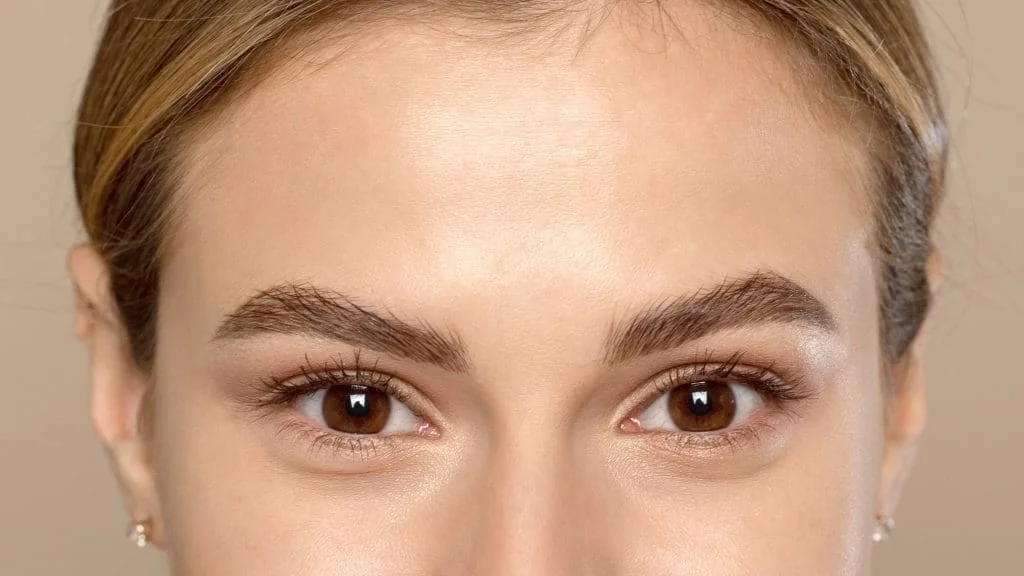
Brow bone reduction is a surgical procedure that reshapes the supraorbital rim — the bony ridge above the eye sockets — to soften the forehead’s appearance and create a more feminine facial profile. The procedure is also referred to as forehead feminization, frontal cranioplasty, or brow bossing reduction.
Understanding the Anatomy
The prominence of the brow bone is determined by the size and shape of the frontal sinus — an air-filled cavity behind the forehead bone. The extent of that sinus dictates which surgical technique will produce the best result. This is precisely why craniofacial fellowship training matters: operating near the frontal sinus and orbital rim requires intimate knowledge of skull anatomy that goes beyond standard plastic surgery training.
The Three Frontal Bone Contouring Techniques
Type I — Burring (Bone Shaving)
Best for patients with a thick frontal bone and a small or absent frontal sinus. The outer table of bone is shaved down directly. Least invasive, no bone replacement needed.
Type II — Grafting (Shaving + Bone Cement)
Shaving combined with an additive grafting material to fill depressions and smooth contours. Useful for subtle asymmetries.
Type III — Setback (Forehead Reconstruction)
The most common technique for patients with a large frontal sinus. The anterior wall of the frontal sinus is removed, reshaped, and secured back in a more balanced position. Requires craniofacial expertise. The setback is often referred to simply as a Type III.
Benefits Of a Brow Bone Reduction
Step 1 — Your Consultation
Bone contouring produces lasting structural change — unlike fillers or non-surgical approaches that require maintenance.
Softer Upper-Face Appearance
Reducing brow projection lightens the look of the upper face — heavy brow bones can cast shadows over the eyes and make the face appear harsher or older than it is. Patients commonly report looking more rested and approachable.
Natural Appearance
Dr. Day’s craniofacial training allows precise, anatomically appropriate reshaping — results look natural, not surgical.
Concealed Scar Placement
The pre-trichial or coronal incision is concealed within or just in front of the hairline. Scars are meticulously closed, optimized over months of healing, and typically hidden by hair growth — though scar appearance varies by individual.
Combines Well with Other Facial Procedures
Brow bone reduction is often performed alongside a brow lift, upper eyelid surgery, rhinoplasty, or facelift when patients are addressing multiple aging or proportional concerns at once — saving recovery time and reducing total anesthesia exposure.
Can Be Staged
Patients who prefer a phased approach can undergo brow bone reduction as a standalone procedure and add other facial procedures — brow lift, blepharoplasty, rhinoplasty, or facelift — later if desired.
Am I a Good Candidate for a Brow Bone Reduction?
Ideal candidates are in good overall health and have realistic expectations for what brow bone reduction can achieve. Dr. Day reviews each patient’s anatomy with CT imaging before recommending a specific technique — your forehead bone structure, frontal sinus size, and overall facial proportions all play a role in surgical planning.
- You May Be a Good Candidate If:
- You have a prominent brow ridge, heavy brow bossing, or asymmetry that bothers you
- You feel your upper face looks heavier, harsher, or older than you'd like
- You are in good general health with no uncontrolled medical conditions
- You are a non-smoker, or are willing to stop smoking well before surgery
- - You have realistic expectations and are seeking a long-lasting structural change
- You are open to combining brow bone reduction with brow lift, eyelid surgery, rhinoplasty, or facelift if it would improve your result
- When to Consider Waiting
- You have active or uncontrolled medical conditions that increase surgical risk
- You smoke and are unwilling to stop — smoking impairs bone healing and increases complication risk
- You are seeking a non-surgical or temporary solution
- You are under 18 years of age (requires individual evaluation)
- You are pregnant or planning pregnancy in the near term
- You have unrealistic expectations about the degree of change possible
Not Sure If You're a Candidate?
Schedule a consultation with Dr. Day to discuss your goals and options.
Your Brow Bone Reduction Journey
Step 1 — Consultation & CT Imaging
Your consultation begins with a thorough evaluation of your goals and facial anatomy. For brow bone reduction, Dr. Day requires a pre-operative CT scan of the skull to assess frontal sinus size and bone thickness — this imaging determines which technique (Type I–IV) is right for you and ensures the safest, most precise surgical plan. Call (425) 818-8991 to schedule your consultation.
Step 2 — Surgical Planning & Virtual Simulation
Using your CT imaging, Dr. Day plans your procedure in detail before surgery day. For complex cases, he uses Virtual Surgical Planning — computerized 3D simulation of the planned bone contour — to refine the surgical approach and improve the predictability of your result. You’ll receive pre-operative instructions covering medications to avoid, smoking cessation if applicable, and what to bring on surgery day.
Step 3 — Surgery
Brow bone reduction is performed under general anesthesia. When scalp advancement is part of the surgical plan, Dr. Day uses a pre-trichial incision — placed just in front of the hairline so the closure is concealed within the anterior hairline. When scalp advancement is not part of the plan, a coronal incision (placed within the hair-bearing scalp) may be used; this is hidden by surrounding hair. Surgery takes approximately 3 hours. Most patients stay overnight in the hospital for optimal pain control, though some are discharged the same day.
Step 4 — Recovery Timeline
Days 1–3
What to Expect
Low-grade activity (walking) is encouraged starting the day after surgery. Swelling peaks. Head elevation and cold compresses recommended. Most patients describe manageable discomfort rather than severe pain.
Week 1
What to Expect
Low-grade activity (walking) is encouraged starting Day 1. Noticeable swelling and bruising around the forehead and eyes is normal. Desk and remote work resumes by the end of Week 1. No grimace, grunt, strain, or sweat-inducing activities.
Weeks 2-3
What to Expect
Sutures removed (if non-dissolving). Begin gradual return to exertional activity — start at 50% of pre-operative baseline, increasing gradually each day. Light exercise achieved by end of this phase.
Weeks 4-6
What to Expect
Full return to pre-operative activity level. Unrestricted exercise including high-impact activity. Forehead contour continues to refine through month 3.
Month 1–3
What to Expect
Significant swelling resolves. Forehead contour becomes clearer. Scalp numbness along incision line is normal and gradually improves.
Month 6–12
What to Expect
Final results visible. Bone healing is complete. Residual scalp numbness (if any) continues to resolve over months.
Why Dr. Day's Craniofacial Fellowship Makes the Difference
Not all plastic surgeons are trained to operate on the bones of the skull and face. Brow bone reduction — particularly the Type III frontal cranioplasty — requires cutting, repositioning, and securing the anterior wall of the frontal sinus, which sits directly adjacent to the brain cavity and orbital rim. This is advanced craniofacial bone surgery, not soft tissue work.
Craniofacial vs. Standard Plastic Surgery Training
Dr. Day completed a fellowship in Craniofacial & Pediatric Plastic Surgery — one of the most rigorous subspecialty training programs in the field. This fellowship goes beyond standard plastic surgery residency to cover complex reconstruction of the entire skull and face. Craniofacial surgeons work regularly with the bones of the forehead, orbit, and midface — the same structures involved in brow bone reduction.
By contrast, a surgeon without craniofacial fellowship training may have limited exposure to frontal sinus anatomy, increasing the risk of inadvertent sinus entry, contour irregularities, or insufficient bone removal.
The Only Craniofacial Fellowship-Trained Surgeon in Bellevue
Dr. Day is the only surgeon in Bellevue with both double board-certification (ABPS + ABS) and craniofacial fellowship training. This credential is not replicable by competitors — it reflects years of specialized surgical education in the exact bone-work techniques used in brow bone reduction.
Virtual Surgical Planning
For complex forehead cases, Dr. Day utilizes CT-guided virtual surgical planning — 3D imaging technology used to simulate the planned bone contour before surgery. This approach, drawn from his academic research in craniofacial reconstruction, allows for more predictable, symmetric outcomes. Dr. Day has published peer-reviewed research in 3D surgical planning techniques.
What Results Can I Expect from a Brow Bone Reduction?
Most patients report that the change in forehead appearance is a remarkable transformation — a softer, smoother forehead profoundly affects how the face is read and perceived by others. Results from brow bone reduction are designed to be long-lasting; the reshaped bone does not revert over time.
What to Expect from Your Results
- Flatter, smoother forehead profile from both front and side view
- Softer brow contour that no longer projects aggressively above the eyes
- A more feminine upper face that harmonizes with other features
- Minimal, well-concealed hairline scar that fades significantly over 6–12 months
- Long-lasting structural change — results are typically lifelong and do not require maintenance
Brow Bone Reduction Cost in Bellevue
Brow bone reduction performed for aesthetic reasons is a self-pay procedure. In select cases — such as reconstruction following trauma, tumor removal, or congenital deformity — insurance may cover part or all of the cost. Our office can help you understand what to expect during your consultation.
What Affects the Cost of a Brow Bone Reduction?
- The surgical technique required (Type I–IV) — more complex Type III/IV procedures require longer operating time.
- Whether brow bone reduction is performed as a standalone procedure or combined with other FFS components.
- Anesthesia, surgical facility, and pre-operative imaging fees.
- Insurance coverage status — patients with coverage may have significantly reduced out-of-pocket costs.
What’s Included in Your Brow Bone Reduction Investment
Your surgical fee covers all of the following at Pacific Sound Plastic Surgery:
- Surgeon's fee
- Facility / operating room fee
- Anesthesia (administered by a board-certified anesthesiologist or certified registered nurse anesthetist)
- Enhanced Recovery After Surgery medication (Exparel)
- Cosmetic surgery insurance coverage (Cosmetasure)
- High-end compression garment (Isavella)
- High-end scar ointment (Biocorneum)
- Swelling and bruising ointment (Arnica)
- Clara Recovery Supplements
- Chlorhexidine Anti-Septic Scrub Cloths
- Post-operative recovery and follow-up care
Financing Options
Pacific Sound Plastic Surgery accepts CareCredit (6-month financing) and Alphaeon Credit, two of the most widely used healthcare financing programs. Both allow patients to begin their journey without paying the full cost upfront.
Brow Bone Reduction
Starting from $8,500
Insurance may cover medically necessary cases. CareCredit and Alphaeon Credit financing available.
Full pricing is discussed at your personalized consultation.
Why Choose Dr. Kristopher Day for Your Brow Bone Reduction?
Craniofacial Fellowship Training
The only Bellevue-area surgeon with advanced craniofacial fellowship credentials for forehead and facial bone surgery — the same training used in pediatric skull reconstruction.
Double Board-Certified
American Board of Plastic Surgery (ABPS) + American Board of Surgery (ABS) — the highest standard of surgical credentialing.
Personalized Aesthetic Approach
Every face is different. Dr. Day’s surgical plan begins with your goals and your anatomy — never a template — so the result harmonizes with the rest of your features instead of overpowering them.
Transparent, Streamlined Process
Our patient care coordinator walks you through pricing, financing, scheduling, and pre-op preparation — so there are no surprises and you can focus on the experience.
Published Craniofacial Researcher
30+ peer-reviewed publications including work in 3D virtual surgical planning — the same technology applied to your forehead reconstruction.
Highly Rated Bellevue Plastic Surgeon
One of the highest-rated plastic surgeons in Bellevue, with consistent praise for surgical artistry, bedside manner, and gender-affirming care.
Surgical Facilities
Swedish Medical Center · Carillon Point Surgery Center ·
Virginia Mason Franciscan Health · Sound Plastic Surgical Center








Conveniently Located for Eastside Families
Pacific Sound Plastic Surgery is centrally located in downtown Bellevue, making Dr. Day’s fellowship-trained expertise accessible to families throughout Bellevue and the greater Eastside — without the stress of navigating Seattle traffic. Our patients enjoy a private, boutique surgical experience with on-site validated parking, just minutes from the communities they call home.
Seattle
~15 minutes
World-class plastic surgery results without the downtown Seattle parking hassle. A quick drive across SR-520 or I-90 to our private Bellevue office.
Kirkland
~10 minutes
Just minutes from downtown Kirkland and the Juanita waterfront via I-405 or surface streets.
Redmond
~10 minutes
Convenient for the Redmond tech community via SR-520 or surface streets.
Mercer Island
~10 minutes
A quick drive across I-90. Our discreet, private environment is ideal for discerning Mercer Island residents.
Issaquah
~10 minutes
Convenient for Issaquah Highlands and Gilman Village area families via I-90.
Renton
~5 minutes
Easy access from Renton and the Landing via I-405 North. Boutique care and personalized attention just minutes away.
Frequently Asked Questions
What is the difference between Type I and Type III brow bone reduction?
Type I is a shaving technique best suited for patients with a thick frontal bone and a small or absent frontal sinus. Type III — forehead reconstruction — is required when the frontal sinus is large and close to the outer bone surface. In Type III, the anterior wall of the frontal sinus is removed, reshaped, and secured back in a more feminine position. Your CT scan determines which technique is right for your anatomy.
Where is the incision placed?
Two incisions are commonly used. A pre-trichial incision is placed just in front of the hairline; closure is concealed within the anterior hairline, and the hairline can be advanced at the same time when desired. A coronal incision is placed within the hair-bearing scalp and is used when hairline advancement is not part of the plan; this incision is hidden by surrounding hair. Dr. Day selects the incision based on your hairline position, hair pattern, and surgical goals.
How long does recovery take?
Most patients return to desk or remote work by the end of Week 1. Major swelling resolves by weeks 2–3. Light exercise resumes at weeks 2–4 using a gradual return protocol. Full unrestricted activity, including high-impact exercise, returns by weeks 4–6. Final results — including complete resolution of scalp numbness along the incision — can take several months. Bone healing is complete well before visible results are finalized.
Will I still look like myself after surgery?
Yes. Dr. Day’s approach emphasizes feminizing your features while preserving your unique identity. The goal is never to create a generic look but to harmonize your facial features in a way that feels authentic to you. Your wishes guide the surgical plan.
Is brow bone reduction painful?
Discomfort rather than severe pain is how most patients describe their recovery. Pain is well-managed with prescription medication in the first few days, transitioning to over-the-counter relief by week one. Swelling and pressure sensation are the most commonly reported experiences.
How do I prepare for my consultation?
Come prepared with photos that represent the forehead appearance you are hoping to achieve, as well as photos of your current profile from multiple angles. If you have existing CT imaging, bring it or provide access. Be ready to discuss your medical history, current medications, and any prior surgeries. The consultation is a conversation — there is no pressure to commit to anything.
Schedule Your Brow Bone Reduction Consultation
You deserve to feel confident in your appearance again.
Dr. Day and the Pacific Sound team create personalized transformation plans tailored to your unique goals.