
Everything You Need to Know About Tummy Tuck Procedures in Seattle

Seattle city skyline - tummy tuck seattle

Introduction

In Seattle, a city known for its innovation and beauty, many professionals are turning to cosmetic surgery to enhance their confidence and align their external appearance with how they feel on the inside. Among these procedures, the tummy tuck stands out as a popular choice, especially among women seeking to reclaim their body’s contour following pregnancy or significant weight loss.

Tummy Tuck Benefits:

  • Reveals a toned, slimmer abdomen by removing excess skin and fat
  • Restores weakened or separated muscles, often a side effect of pregnancy
  • Improves overall silhouette, enhancing fit and appearance of clothing
  • Boosts self-confidence by aligning your physical appearance with your inner self-esteem

Seattle Trends show an increasing demand for personalized care in cosmetic procedures. Busy professionals in the area prioritize safety, minimal downtime, and natural-looking results. They seek out expert surgeons who understand and respect their unique needs, lifestyle, and aesthetic goals.

To meet these emerging trends, surgeons in Seattle, including Pacific Sound Plastic Surgery, offer a range of tummy tuck options, from mini tucks focusing on minimal issues to more comprehensive procedures delivering dramatic transformations. These tailored solutions ensure that each patient achieves the best outcomes based on their specific needs and circumstances.

An infographic detailing the steps of a tummy tuck procedure, recovery tips, and statistics on its popularity and satisfaction rates among Seattle residents - tummy tuck seattle infographic process-5-steps-informal

Understanding Tummy Tuck Procedures

When considering a tummy tuck in Seattle, it’s crucial to understand the various types available. This knowledge ensures that you choose a procedure that aligns with your body goals and expectations. Let’s dive into the main types of tummy tucks offered.

Types of Tummy Tucks

  • Mini Tummy Tuck: Ideal for those who have a “pooch” or minor sagging below the belly button. A mini tummy tuck focuses on tightening the lower abdomen. It involves a shorter incision and typically requires less recovery time. This procedure is best for individuals who are generally satisfied with the upper part of their abdomen.
  • Standard Tummy Tuck: This is the most common type, addressing both the upper and lower abdomen. It involves an incision from hip to hip above the pubic area, allowing for the removal of excess skin and fat. The underlying muscles can also be tightened during a standard tummy tuck.
  • Extended, or 270-Degree Tummy Tuck: This procedure is a great choice for people who have a lot of extra skin or fat that goes around their sides or even to their lower back. It requires a longer cut than what you’d expect with a standard tummy tuck. This allows for a bigger area to be shaped and improved.

Each of these procedures has its own set of benefits and considerations. During your consultation, your surgeon will help determine which type suits your body type and desired outcome best.

Choosing the Right Procedure

Deciding on the best tummy tuck option requires thinking about a few key points, such as how much extra skin you have, the state of your stomach muscles, and your general body shape. For example, if you’ve lost a lot of weight, you might get better results from an extended tummy tuck or a circumferential body lift. On the other hand, if you only have a small amount of extra skin below your belly button, a mini tummy tuck could be just right for you.

Customization and Combination

It’s not uncommon for a tummy tuck procedure to be customized or combined with other surgeries, such as liposuction, to achieve the desired contouring effect. This approach allows for a more tailored result, addressing not just the excess skin and muscle laxity but also any stubborn fat pockets for a smoother, more defined abdominal profile.

For those considering a tummy tuck in Seattle, have a clear understanding of the different procedures available. By consulting with a board-certified plastic surgeon, you can discuss your aesthetic goals and determine the most appropriate type of tummy tuck to achieve your desired outcome. The key to a successful tummy tuck is not just the procedure itself but choosing the right surgeon who understands your vision and has the expertise to bring it to life.

For more detailed information on tummy tuck procedures and to see before and after photos, visit Pacific Sound Plastic Surgery’s Tummy Tuck page.

In the next section, we’ll explore how to prepare for your tummy tuck, from the initial consultation through to pre-op instructions, ensuring you’re fully informed and ready for your transformation journey.

Preparing for Your Tummy Tuck

When considering a tummy tuck in Seattle, preparing for your procedure is as crucial as the surgery itself. This preparation involves three key stages: the consultation, setting your expectations, and following pre-op instructions. Let’s break these down:

Consultation

Your journey begins with a consultation. This is more than just a meet-and-greet; it’s a comprehensive session where Dr. Kris Day assesses your health, discusses your goals, and evaluates if a tummy tuck is the right choice for you. This is your time to ask questions and express any concerns. It’s essential that you feel comfortable and confident in your decision. The consultation also allows Dr. Day to tailor the surgery to your specific needs, ensuring the best possible outcome.

Setting Expectations

It’s vital to have realistic expectations. A tummy tuck can significantly improve your abdominal area’s appearance, but it’s not a one-size-fits-all solution. Dr. Day will discuss what the surgery can and cannot do for you. For example, while it can remove excess skin and fat, it’s not a substitute for weight loss or a healthy lifestyle. Understanding the limitations and possibilities will help you feel satisfied with your results.

Pre-Op Instructions

Following pre-op instructions is key to a smooth surgery and recovery. Dr. Day and his team will provide a detailed list of dos and don’ts. This might include dietary restrictions, medication adjustments, and guidelines on smoking or alcohol consumption. Adhering to these instructions minimizes risks and sets the stage for a successful surgery.

Preparation doesn’t end with the physical aspects. Ensuring you have the support you need at home during recovery, such as help with daily tasks and childcare if necessary, is crucial. Also, arranging transportation for the day of your surgery and your first post-operative visit is important, as you won’t be able to drive yourself.

Good candidate for a tummy tuck - Illustration showing post-pregnancy body, significant weight loss, and commitment to a healthy lifestyle - tummy tuck seattle infographic pillar-3-steps

As you prepare for your tummy tuck in Seattle, keep in mind that this journey is a partnership between you and your surgeon. Being well-prepared, informed, and having a clear understanding of the process will help you achieve the best results possible.

For more detailed information on preparing for your tummy tuck, including what to expect during your consultation, visit Pacific Sound Plastic Surgery’s Tummy Tuck page.

In the next section, we’ll delve into the tummy tuck procedure itself, covering everything from incisions and scars to muscle repair and recovery process.

The Tummy Tuck Procedure Explained

When you’re considering a tummy tuck in Seattle, understanding the procedure from start to finish can help ease your mind and prepare you for the journey to a more confident you. Let’s break down the key parts of the procedure: incisions and scars, muscle repair, skin removal, anesthesia, and the recovery process.

Incisions and Scars

The tummy tuck procedure, or abdominoplasty, involves making an incision from hip to hip, just above the pubic area. This allows for the removal of excess skin and fat and the repair of abdominal muscles. A second incision around the navel may be necessary to remove excess skin in the upper abdomen. The goal is to place the incision in a way that the resulting scar is hidden beneath underwear or a bikini.

Muscle Repair

For many patients, especially those who have gone through pregnancy, the abdominal muscles have stretched or separated. During a tummy tuck, these muscles are brought back together and stitched into place. This step is crucial for creating a firmer abdomen and a narrower waist.

Skin Removal

Excess skin that has lost its elasticity is removed during the procedure. This is a key step for achieving a flatter, more toned abdominal area. The remaining skin is then carefully stretched down, and the navel is repositioned to a natural-looking location.

Anesthesia

A tummy tuck is performed under general anesthesia, meaning you will be completely asleep and pain-free during the procedure. This ensures your comfort and safety throughout the surgery.

Recovery Process

After the surgery, you’ll need time to recover. Initially, you can expect some swelling and discomfort, but pain medication will be prescribed to manage this. It’s important to follow your surgeon’s instructions carefully to ensure optimal healing. Most patients can return to work within a month and resume strenuous exercise after six weeks. The scar will gradually fade over time but will not disappear completely.

Remember: Each tummy tuck is customized to the patient’s needs, so your experience may vary slightly. Choosing a skilled surgeon like those at Pacific Sound Plastic Surgery ensures you’re in good hands, from the initial consultation to your post-operative care.

For more insight into the tummy tuck process and to view before and after photos, visit Pacific Sound Plastic Surgery’s Tummy Tuck page.

Next, we’ll discuss the costs and considerations for a tummy tuck in Seattle, helping you understand the financial aspect of achieving your body goals.

Cost and Considerations in Seattle

When considering a tummy tuck in Seattle, understanding the financial investment is as crucial as knowing the procedural details. Let’s break down the average cost, factors affecting price, and insurance coverage.

Average Cost

In Seattle, the price of a tummy tuck can differ a lot from person to person. Costs may range or vary, because each patient gets a plan made just for them. After you talk with your doctor, you’ll get a specific quote that fits your needs.

Factors Affecting Price

Several elements can influence the final cost of your tummy tuck in Seattle:

  • Type of Tummy Tuck: Different types (e.g., mini, full, extended) can affect the price.
  • Surgeon’s Expertise: More experienced surgeons typically charge higher fees.
  • Facility Costs: Operating room, hospital stay (if needed), and anesthesia.
  • Geographical Location: Costs can vary even within Seattle based on the surgery location.
  • Additional Procedures: Combining a tummy tuck with liposuction or other surgeries might increase the cost.

It’s essential to discuss these factors during your consultation to get a clear picture of the expected expenses.

Insurance Coverage

Generally, tummy tuck procedures are considered cosmetic and are not covered by insurance. However, there are exceptions, such as when a tummy tuck is part of a reconstructive surgery or medically necessary procedure (e.g., to address issues from a significant weight loss or pregnancy). In such cases, some aspects of the surgery might be covered.

For those considering a tummy tuck for cosmetic reasons, it’s crucial to plan financially. Some clinics offer financing options or payment plans to help make the procedure more accessible.

Conclusion

Understanding the cost and financial considerations of a tummy tuck in Seattle is a vital step in your journey. While the procedure can be a significant investment, the transformation and boost in self-confidence it offers can be invaluable for many. During your consultation, don’t hesitate to ask detailed questions about all potential costs and explore financing options if needed.

For more detailed information on what a tummy tuck entails and to explore financing options, visit Pacific Sound Plastic Surgery’s Tummy Tuck page.

Navigating through these financial considerations will bring you one step closer to achieving your desired body contours. Next, we’ll address some of the most frequently asked questions about tummy tuck procedures in Seattle.

Frequently Asked Questions about Tummy Tuck in Seattle

How much does a tummy tuck cost in Seattle?

The cost of a tummy tuck in Seattle can vary widely. Several factors impact pricing, including the surgeon’s experience, the type of tummy tuck procedure, and the complexity of your case. On average, you might expect the cost to range from $7,000 to $15,000. It’s essential to consult with your surgeon for a detailed quote that considers all aspects of your procedure. Choosing a surgeon based on experience and results is more important than cost alone. For more detailed information on what influences the cost of a tummy tuck, click here.

What should I know before getting a tummy tuck?

Before a tummy tuck, it’s crucial to have realistic expectations and a clear understanding of the recovery process. Know that:

  • A tummy tuck is a significant surgical procedure requiring downtime.
  • You’ll need to follow pre- and post-operative instructions closely to minimize risks and ensure the best outcome.
  • It’s essential to be at or near your ideal weight and maintain a stable weight after the procedure.
  • Smoking can adversely affect your surgery outcome, so you should quit well in advance.
  • A tummy tuck is not a substitute for weight loss or an appropriate exercise program.
  • The results are long-lasting, provided you lead a healthy lifestyle.

How does a tummy tuck compare to non-surgical options like Sonobello?

A tummy tuck, or abdominoplasty, is a surgical procedure that removes excess skin and fat from the abdomen and tightens the abdominal muscles. It’s designed for those with significant skin laxity and muscle separation, often following pregnancy or substantial weight loss. Non-surgical options like Sonobello offer liposuction to remove fat but do not address excess skin or muscle separation. Therefore, the choice between a tummy tuck and non-surgical options depends on your specific needs and goals. If you’re seeking to remove excess skin and tighten abdominal muscles for a more sculpted look, a tummy tuck may be the more effective option. For those who are closer to their ideal weight and looking to remove localized fat deposits without the downtime of surgery, non-surgical options could be sufficient.

To learn more about what a tummy tuck entails and to explore financing options, visit Pacific Sound Plastic Surgery’s Tummy Tuck page.

Understanding these FAQs will help you make an informed decision about whether a tummy tuck in Seattle is right for you. Next, we’ll delve into a personalized approach to tummy tuck surgery at Pacific Sound Plastic Surgery.

Conclusion

As we wrap up our comprehensive guide on tummy tuck procedures in Seattle, it’s crucial to emphasize the importance of a personalized approach in cosmetic surgery. At Pacific Sound Plastic Surgery, we understand that every individual’s body, goals, and needs are unique. This understanding is at the heart of our practice.

When considering a tummy tuck in Seattle, choosing a facility that tailors the procedure to fit your specific requirements is essential. Our team, led by experienced surgeons, is committed to ensuring that each patient receives personalized care. From the initial consultation through to recovery, our focus is on your comfort, safety, and satisfaction.

Why Choose Pacific Sound Plastic Surgery?

  • Personalized Consultation: We start with a thorough consultation to understand your goals and to assess your anatomical needs. This step is crucial in developing a surgical plan that aligns with your expectations.
  • Expertise and Experience: Our surgeons possess the expertise necessary to perform a range of tummy tuck procedures, from mini tummy tucks to more extensive surgeries. Their experience ensures that you receive the best possible outcomes.
  • Innovative Techniques: As highlighted earlier, we employ advanced techniques, including the drainless tummy tuck method, which enhances comfort and reduces recovery time for qualifying patients.
  • Comprehensive Care: Your journey doesn’t end with the surgery. We provide detailed post-operative instructions and follow-up care to support your recovery process.
  • Patient Satisfaction: Our greatest reward is seeing the positive impact on our patients’ lives. The confidence and happiness our patients experience post-surgery speak volumes about the quality of care we deliver.

Choosing to undergo a tummy tuck is a significant decision. At Pacific Sound Plastic Surgery, we’re here to guide you through each step, ensuring that your journey is as smooth and comfortable as possible. Our commitment to excellence, coupled with a personalized approach, sets us apart as a leading destination for tummy tuck procedures in Seattle.

For more information on how we can help you achieve your aesthetic goals, or to schedule a consultation, visit our services page. Let us be part of your transformation journey, helping you regain confidence and embrace a more contoured, toned abdomen.

Plastic surgery is not just about altering your appearance; it’s about enhancing your confidence and quality of life. At Pacific Sound Plastic Surgery, we’re dedicated to helping you look and feel your best.

Could You Benefit From Jaw Reduction Surgery? 

Your jaw bone is a vital part of your face as it sets a frame for the rest of your features. If you’re displeased with its appearance, a jaw reduction is worth exploring. Jaw reduction surgery can help resolve an oversized or square jaw to create harmony among the other features on your face. Let’s dive deeper into what jaw reduction surgery is and how you might benefit from this procedure.

What is Jaw Reduction Surgery?

Surgeon and his assistant performing cosmetic surgery on nose in hospital operating room. Nose reshaping, augmentation. Rhinoplasty.

Also known as jaw contouring, jaw reduction surgery is performed to reduce the look of excessively large jaws and slim your jawline. It can help create a softer appearance so that your chin, jawline, and other facial features look more proportionate.

Depending on your unique goals, a jaw reduction may be tailored to improve the masculinity or femininity of your jaw. Dr. Day will work with you to design a customized plan that leads to a refined facial structure and natural-looking results.

Benefits of Jaw Reduction Surgery

The benefits of a jaw reduction depend on how the procedure is performed and what you hope to accomplish. It can leave you with a more contoured jawline and allow you to look more feminine or masculine. For example, the angle of the jaw can be reduced so that the jaw is less wide in gender affirming facial feminization. Or jaw implants can be placed in the same area to achieve a more masculine, defined jawline.Most importantly, it has the potential to boost your confidence and self-esteem.

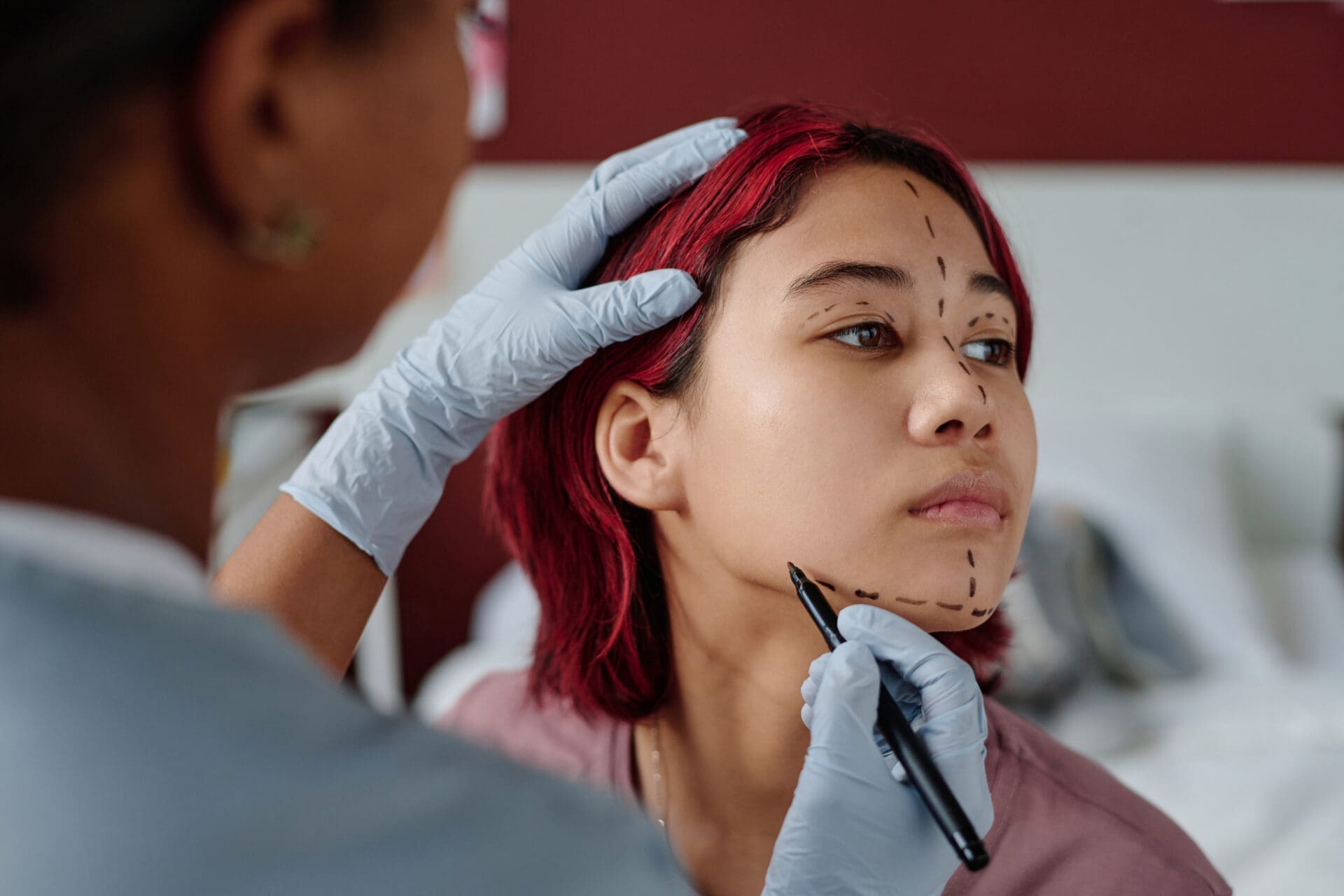
Gloved hands of young professional plastic surgeon with highlighter drawing liftmarks on face of cute teenage girl in clinics

Who is a Candidate for a Jaw Reduction?

You may benefit from jaw contouring if any of these statements apply to you.

  • You believe your large jaw is out of proportion with the rest of your face.
  • You wish to resolve congenital abnormalities in the lower part of your face.
  • You’d like to achieve a more masculine or feminine facial appearance.
  • You hope to improve the symmetry in your face.
  • You’re in generally good health and have realistic expectations of the surgery.
  • You’re longing for a “V-line” shaped face.

During a consultation with Dr. Day, you can look at before and after photos of real patients who have undergone the procedure and ask any questions you may have. Dr. Day will inform you of whether you could benefit from a jaw reduction. If not, he can suggest an alternative procedure that will allow you to meet your goals.

What Happens During a Jaw Reduction?

Jaw reduction is performed under general anesthesia and usually takes a few hours. During the procedure, Dr. Day will make incisions between your gum and cheek so he can easily access your jawbone. Then, he will carefully remove the ideal amount of bone to reshape the jaw. Next, he will use dissolvable stitches to close the wound.

At the end of the procedure, Dr. Day will apply a surgical dressing or bandage. This will reduce swelling and prompt the healing process. Once the swelling begins to fade away, you’ll start to notice your results. The final results, however, will likely take three to six months to appear so it’s important to be patient.

Doctor,Preparing,Female,Patient

Recovering From Jaw Reduction

After jaw contouring, you’ll likely experience some pain, inflammation, bruising, and swelling. Rest assured, this is completely normal and will likely subside in one to two weeks. Dr. Day will recommend that you elevate your head while lying down and stick to a soft food diet with foods like soup, applesauce, and pudding for the first few days.

He’ll also provide you with a prescription mouthwash that will help clean the incision sites and reduce the risk of infection. In addition, Dr. Day will encourage you to take it easy, eat a well-balanced diet, and take light walks.

Most patients resume work and everyday activities one week following the procedure. More vigorous physical exertion should be avoided for at least four weeks. Upon discharge, you’ll receive a customized recovery plan and are welcome to contact our office with any questions or concerns.

Side view of middle-aged bearded man in white t-shirt over grey studio background, copy space. Profile portrait of handsome man with closed eyes posing on gray, standing straight and looking aside

Schedule a Jaw Reduction Surgery in Bellevue Today!

If you’re interested in a jaw reduction at Pacific Sound Plastic Surgery in Bellevue, we encourage you to contact us for a no-obligation consultation. We can evaluate your abdominal area and help you determine whether you’re a good candidate for this procedure.

Contact Us

What is a Drainless Tummy Tuck?

There’s a good chance you’ve heard of a tummy tuck. In fact, you may know someone who has one or be considering one if you’d like a flatter, more toned abdomen. While a traditional tummy tuck is a good choice for many patients, a drainless tummy tuck may be an option that is worth exploring.

While a traditional tummy tuck focuses on the lower abdomen and muscles, and uses cumbersome drains, a drainless tummy tuck does the opposite and avoids the use of drains. Keep reading to learn more about what a drainless tummy tuck is and how you may benefit from this less popular yet highly effective and life-changing procedure.

How a Drainless Tummy Tuck Works

Abdominoplasty,Obesity,Surgery.,Aesthetic,Abdominal,Fat,Liposuction

Also known as a drainless abdominoplasty, a drainless tummy tuck is performed to remove loose, sagging skin from the area above the belly button. It can tighten and contour your abdominal region to give you more confidence and self-esteem.

During a drainless tummy tuck, a surgeon makes an incision along the lower abdomen and hones in on removing the lax skin throughout your abdomen. Fortunately, you can easily hide these incisions under your underwear or swimsuit.

It’s important to note that a drainless tummy tuck differs from a traditional tummy tuck in that it doesn’t employ postoperative drains. This is possible through the use of internal progressive tension sutures, which decrease the internal cavity that can otherwise collect fluid. In many cases, patients pair a drainless tummy tuck with other body contouring procedures, like breast implants and lifts, which can use the same incision to deliver exceptional, dramatic results.

In general, a drainless tummy tuck is a safe procedure, especially when it’s performed by a highly skilled and experienced surgeon. However, as with any surgical procedure, it does come with some risks, like scarring, would formation, and infection. The good news is that these risks are rare.

Recovering From a Drainless Tummy Tuck

Tummy Tuck

The recovery process for a drainless tummy tuck is usually similar to a traditional tummy tuck.The difference is that you do not have to care for postoperative drains, which are sometimes uncomfortable and sometimes cumbersome to maintain.

While recovery time varies from patient to patient, one to two weeks is fairly typical. You can expect to go home in a surgical bandage, which we will later replace with compression garments to reduce swelling and bruising.

You can manage any pain or discomfort you experience with over-the-counter or prescription medications. As long as you have a desk job, you can resume work in a few days and rigorous physical activity in approximately four weeks.

Who is a Candidate for Drainless Tummy Tuck?

Good Candidates for a Mommy Makeover

As you explore your surgical options, you should understand that a drainless tummy tuck isn’t intended to replace a traditional tummy tuck in all patients. Oftentimes, we perform drainless tummy tucks on patients who are at low risk of accumulating a postoperative fluid collection. You may be a good candidate for a drainless tummy tuck if any of these statements apply to you:

  • You are concerned about lax skin in your abdominal area.
  • You have excess fatty tissue in the abdominal region.
  • You have a full “diastasis recti”, which affects the contour in your abdominal area.
  • You are in reasonably good health and have realistic expectations about the results.

Benefits of a Drainless Tummy Tuck

There are several reasons you may want to move forward with a drainless tummy tuck, including:

Improved Appearance

 By removing excess skin from the abdominal area, you can enjoy a flatter midsection. This can be a huge plus if you’ve already lost a lot of weight and have residual loose or extra skin and soft tissue.

Better Posture

Since a drainless tummy tuck tightens the loose skin in the abdominal area, it may improve your posture. Improved posture is particularly important for your spine and can effectively reduce back pain.

Less Skin Issues

If you have excess skin in the abdominals, you may face infections or rashes. A drainless tummy tuck can reduce the risk of these uncomfortable problems.

Increased Confidence

With a drainless tummy tuck, you can feel good about the way you look. This procedure also opens the doors to tighter clothing options that you might not have considered in the past.

Cropped of plastic surgeon hands checking afro woman belly before beauty procedure, liposuction concept

Schedule a Drainless Tummy Tuck Consultation in Bellevue Today!

If you’re interested in a drainless tummy tuck at Pacific Sound Plastic Surgery in Bellevue, we encourage you to contact us for a no-obligation consultation. We can evaluate your abdominal area and help you determine whether you’re a good candidate for this procedure.

Contact Us

What is the Difference Between a Surgical and Non- Surgical BBL?

If you’re longing for a fuller, more voluptuous buttocks, a Brazilian Butt Lift or BBL might be on your radar. It’s a popular procedure that can help you feel more confident in your own body. As you do your research, you’ll find that there are two types of BBLs: a surgical BBL and non-surgical BBL. Let’s dive deeper into what these procedures are and how they differ so you can zero in on the right one for your unique situation.

What is Surgical BBL?

Cryolipolysis.,Cropped,Shot,Of,Young,Slim,Woman,With,Lifting,Up

A surgical BBL involves removing fat from other parts of your body, like your thighs, love handles, waist, or back, and reinjecting it into the butt area. To get enough fat to augment the buttocks, this procedure usually utilizes “circumferential” or “360” liposuction of the abdomen and trunk. The fat that is removed with liposuction is then carefully processed and transferred as a graft into the buttocks. The goal is to leave you with a larger, rounder, more sculpted butt area. Like most surgical procedures, a surgeon performs a surgical BBL using anesthesia and incisions. It offers a variety of benefits, such as:

Smooth Cellulite

A BBL can smooth out your skin and diminish its appearance if you’re bothered by cellulite or skin dimpling.

Greater Volume

A BBL adds the volume to your buttocks, making it larger and fuller.

Improved Body Contour and Symmetry

 A BBL can do wonders for your body contour and may even help you achieve a more symmetrical figure.

Resolved Drooping and Sagging

Drooping or sagging skin can lead to a flatter, less attractive butt area. A BBL effectively reduces overhanging skin tissues to create a more toned look.

What is a Non-Surgical BBL?

Woman,Buttocks,,,Perfect,Slim,Shape,Female,Body,In,Underwear

Unlike a surgical BBL, a non-surgical BBL or “skinny BBL,”doesn’t involve anesthesia or incisions. Instead, it’s non-invasive as it uses injectable dermal fillers to add subtle shape and volume to the buttocks. In most cases, these fillers contain poly-L-lactic acid (Sculpta®), which stimulates the development of collagen, one of the most common proteins in the body. Stimulating collagen production produces fullness and firmness beyond the body’s baseline fat stores in the area, creating fuller and firmer buttocks.

Surgical BBL vs. Non-Surgical BBL

Now that you understand what each butt enhancement procedure entails let’s go over how they differ from one another.

1. Results

If you opt for a surgical BBL, you can expect more dramatic changes that simply can’t be achieved with a dermal filler. A non-surgical BBL, on the other hand, offers more subtle results that may still satisfy you, depending on your goals. In addition, a surgical BBL leads to long-term enhancements that may last for decades, whereas non-surgical BBL injections are more temporary and usually last for two to three years.

2. Downtime

Compared to a non-surgical BBL, a surgical BBL comes with a longer recovery period. You’ll have to take it easy for a while and refrain from vigorous physical activities until your surgeon clears you. A non-surgical BBL requires far less downtime, meaning you can resume work and your daily routine quickly after the procedures. For both procedures, prolonged sitting is discouraged, and form contouring garments are used.

3. Risks

Of course, there are fewer risks with a non-surgical BBL than a surgical BBL. If you go the more invasive route, you should be aware of the potential risks, including infection, bruising, skin discoloration, changes in skin sensation, swelling, and poor wound healing. At Pacific Sound Plastic Surgery, we also follow American Society of Plastic Surgery guidelines for the use of ultrasound to decrease fat embolism. Fortunately, all risks are rare when the procedure is performed by a highly-skilled, experienced surgeon.

4. Costs

Because BBL is a procedure that involves anesthesia and incisions, you may think it’s more expensive than a non-surgical BBL. However, the amount of dermal filler required to produce a good result in non-surgical BBL is significant. So depending on how much impact you would like to have, the skinny BBL may have higher costs associated with the use of more product. The extra cost may be worth it if you’re seeking dramatic, long-term results. You may have to invest in a non-surgical BBL a few times, but a surgical BBL is usually a one-time deal.

Good Candidates for a Surgical BBL and Non-Surgical BBL

If you’re looking for dramatic results that last for a long time, a surgical BBL is your best bet. This is particularly true if you’re in reasonably good health and accept the risks involved. A non-surgical BBL may be a better choice if you hope for more subtle results or if you lack sufficient extra fat in other areas of your body to donate to grafting to the buttocks. BBL injections may also make sense if you want to try out a BBL before you commit to a more invasive and permanent procedure. During a consultation, we can help you decide which option is right for your goals.

Perfect body shape. Beautiful fit woman with long hair posing in white underwear over beige studio background. Attractive slim lady in lingery standing half-turned to camera, free space

Schedule a BBL Consultation in Bellevue Today!

If you’re interested in a BBL at Pacific Sound Plastic Surgery in Bellevue, we encourage you to contact us for a no-obligation consultation. We can evaluate your unique situation and help you determine whether you’re a good candidate for a surgical BBL or a non-surgical alternative. We look forward to hearing from you!

Contact Us

Does Fat Come Back After Liposuction?

Woman with fat abdomen

SHOULD I LOSE WEIGHT BEFORE MY BODY CONTOURING PROCEDURE?

When it comes to body contouring procedures, like liposuction, breast reduction, and tummy tuck (or abdominoplasty), the question about when to have the procedure based on weight loss goals is very common. Does one achieve their weight loss goals before the procedure, or is having the procedure part of the weight loss journey itself? Many patients are concerned that their outcome will not be long-lasting unless they are as slim as they will ever be at the time of surgery. While others are hoping to have their procedure so that they can overcome back pain, poor-fitting clothing, or excessively mobile tissue that prevents activities like running to lose weight. So what is the right answer? Well, there is a short answer and a longer one. The short answer is that, for some procedures, there are safe maximums to body weight indicators, such as Body Mass Index (BMI). If you are within those limits, then proceeding with a given procedure is a fine option. The longer answer is that there are optimal conditions in which to have a procedure and recovery from it safely, and your optimal outcome is not achieved in body contouring without diet and exercise follow-through often for months after surgery anyway. So you really cannot separate the two.

What is Ideal Body Weight?

An ideal body weight was actually computed based on extensive research into the weight for a given height that is at the lowest risk of mortality. Put more simply, the intention of ideal body weight is to express the healthiest weight at which a person can live. There are formulas that can compute an ideal body weight. You may consider a certain weight to be your “ideal,” or when you look and/or feel your best. When it comes to targeting a certain weight before a body contouring procedure, you simply need to be within a safe BMI range with your medical conditions under control and living a lifestyle of healthy diet and nutrition.
What is Body Mass Index (or BMI)?

Body mass index, or BMI, refers to a ratio between the height and weight of a person. The formula for BMI is actually your weight in kilograms divided by the squre of your height in meters. Because we know that bone, fat, and muscle weigh different amounts, the BMI of a person implies the composition of their body. Lower BMI levels usually mean a more healthy body composition (to a point). While higher BMI levels can mean someone is overweight (<25), obese (>30), severely obese (>35), morbidly obese (>40), or superobese (>50). There is a spectrum of opinions and practices, and it somewhat depends on the procedure you are having, but a good rule of thumb is that complication rates increase for plastic surgery procedures performed on patients above a BMI of 35 and it is ideal to be less than a BMI of 30 to have plastic surgery.  

Is It Okay to Lose Weight Before Surgery?

Yes and no. It is, of course, preferable to lose weight to attain a healthy weight before undergoing any surgical procedure. However, the immediate preoperative period is not the time for a lot of weight loss. Weight loss occurs when there is a deficit of calories taken in compared to calories used. If your body is nutritionally deficient – such as could occur during aggressive dieting – then you could be breaking down components of your tissues to support your bodies metabolism, a so-called catabolic state. This could have serious detrimental effects on healing after plastic surgery. Your body needs nutrients to serve as building blocks for healing after surgery, especially healthy protein. Otherwise, complications like wound formation could occur. So it is great to lose weight to attain a healthy weight well in advance of surgery, but you do not want to start weight loss right before of right after undergoing surgery, or this could compromise your surgical outcome.

What if I Am a Bariatric Surgery Patient Who Has Experienced Massive Weight Loss?

There are different definitions for “massive weight loss” or large amounts of weight loss, for example, after bariatric surgery. Procedures such as Roux-en-Y gastric bypass, sleeve gastrectomy, gastric banding, and other weight loss surgeries can result in the loss of hundreds of pounds. Massive weight loss typically refers to greater than 50% loss of excess body weight, or weight above an ideal body weight (above). Because of the importance of healthy, stable nutrition at the time of receiving plastic surgery (also above), it is important to reach a steady weight after massive weight loss, especially following a bariatric procedure. The guidelines for what a steady weight means are at least six months at a stable weight and at least one year after bariatric surgery. Often, it takes about 18-24 months following bariatric surgery to achieve stable weight for greater than six months. So this is a good time to seek body contouring surgery after bariatric surgery or other massive weight loss.

Is It Okay to Lose Weight After Surgery?

Yes, if it is in a healthy manner and after the initial healing period. A good rule of thumb is that if healing after plastic surgery is going well at six weeks, then you can likely resume dieting and more rigorous exercise. These efforts can then optimize your results.

Is Liposuction Performed for Weight Loss, and How Much Weight Can it Take Off?

This is a very common question, but it is perhaps not the right one to ask. Liposuction is not a weight loss procedure. The best avenues to healthy weight loss are through diet, exercise, or – in cases of more severe obesity – a medical or surgical weight loss consultation. While it is true that liposuction will result in the permanent removal of fat cells from the area that is treated, the purpose of liposuction is not to produce weight loss but rather contouring of the body.

What is the Best Weight to Have at the Time of Surgery?

The “best” weight is whatever weight you are at your best and within certain guidelines, such as BMI<35 mentioned above. It is also important to be at your most reasonably healthy weight with good nutrition and hydration going into a surgical procedure. But you do not have to necessarily lose that last 10 pounds to have surgery and a good outcome, which is a common question we receive. Simply maintain steady healthy diet and exercise habits and pursue your procedure when you are ready.

If you want to learn more about what will help you achieve the best body form and function through body contouring plastic surgery, reach out to us at Info@PacificSoundPlasticSurgery.com or by calling 425-818-8991. Dr. Kristopher M. Day, MD, FACS is a board-certified plastic surgeon with extensive experience treating all types of patients after weight loss, bariatric surgery, diet and exercise efforts, or who simply want to achieve better contouring of a specific part of their body. He looks forward to helping you achieve your unique goals in a long-lasting and natural way!

What Does it Take to Become a Plastic Surgeon?

ABPS_Logo FINAL

WHAT DOES IT TAKE TO BECOME A PLASTIC SURGEON?

When most people think of a plastic surgeon, they may think of Kim Kardashian, television shows like “Nip Tuck” or “Botched,” or a luxurious “Doctor 90120”-esque life of luxurious spending on sports cars to golfing in designer clothes before flights to Morocco for weekend vacations. While this sounds nice!…it is really just for the movies. The truth is that plastic surgery is that the practice of plastic surgery is hard work and is often not glamorous. It takes – not years – but decades of training and preparation, often doing tasks that no one would consider luxurious, to acquire the skillsets and insight that it takes to handle tough surgical problems that sometimes no one else can solve.

When I was young my parents told me about delayed gratification. Later, in college, I was introduced to the saying, “it’s a marathon, not a sprint.” Later, after medical school and training years, someone told me, “it’s about the journey, not the destination.” No matter how many times or different way this concept is said, it never quite seems to do justice to the fact that the road is long…so long that maybe it ceases to be a road at all, but simply a way of life. Plastic surgery is a discipline that demands commitment, hard work, dedication, and its practice takes a long time to pursue. Most people do not realize the number of steps and duration of training required to perform plastic surgery, but if you are curious about the pathway then read on!

What is a Plastic Surgeon?

Plastic surgeons were named partly due to the meaning of the Greek word Plastikos, meaning malleable. This concept reflects the distinction of plastic surgeons as those that can mold tissues and adapt to solve varied surgical scenarios. Unlike other surgical disciplines, plastic surgery does not limit itself to a areas of the body (eg, ear, nose, and throat surgeon), organ system (eg, orthopedic surgeon), patient population (eg, pediatric surgeon), or spectrum of techniques (eg, minimally-invasive surgeon). Instead, plastic surgeons are ultimately guided by principles. Plastic surgery is performed on the skin, fat, muscle, and bone from the head-to-toe in adults and children. Most people think of aesthetic, or appearance-based, procedures when they think of plastic surgery. It is true that plastic surgeons typically perform surgery on the surface of a person, but in addition to the improvement of form they also improve function. In fact, subsets of plastic surgery include microsurgery, hand surgery, craniofacial surgery and other specialties that do not focus on appearance but rather the improvement of function after trauma, cancer, or congenital deformities. Plastic surgeons’ techniques are thereby often more sophisticated and intricate because they have been honed by an array of complicated surgical challenges.

What is the Difference Between a Plastic Surgeon and Others That Perform Plastic Surgery?

There are a few differences between plastic surgeons and other surgeons that perform plastic surgery. These include scope of practice, training, experience, institutional affiliation, and other important differences. The somewhat shocking reality is that, legally-speaking, any licensed doctor can offer plastic surgery to patients. A family practice doctor, for example, can perform liposuction or a breast augmentation, despite perhaps not having practiced surgical skills in a formal training program. Cosmetic surgeons may come from various backgrounds, such as obstetrics and gynecology, general surgery, or others and complete additional training in cosmetic surgery. Plastic surgeons go to school and clinical training for the longest duration of any that execute plastic surgical procedures. They are both licensed to practice medicine, and must also have:

  • Completed a plastic surgery residency
  • Are accredited as a plastic surgeon by the American Board of Medical Specialities (ABMS), which is the most respected certifying agency in the United States
  • Been recognized as a specialist in plastic surgery, including: (all) Plastic Surgery, Facial Plastic Surgery, and Oculoplastic Surgery

Many plastic surgeons, such as Dr. Day, then go on to further focus their training and experience in sub-specialties, such as craniofacial surgery, which further extends the skills they can offer to patients. Plastic surgery then has groups, such as the American Society of Plastic Surgery (ASPS) and others, that only board-certified plastic surgeons may become part of. These communities, like the indoctrination paths that lead to being part of them, then reinforce and strengthen the fundamental principles that distinguish plastic surgeons amongst others that perform plastic surgery.

How Long Do Plastic Surgeons Go to School and Training?

To succeed in plastic surgery, you absolutely must love it. You will put in long hours, over long years…or even decades. For example, to achieve membership in the American Society for Aesthetic Plastic Surgery (ASAPS), one of the most respected professional organizations for plastic surgeons, one must complete the following steps after high school:

  • 8+ Years of Higher Education
    • College degree, usually 4 years at a university
    • Medical degree, usually 4 years at a medical school
  • 6+ Years of Accredited Clinical Training
    • Independent Track
      • 5 years of general surgery training
      • 3 years of plastic surgery training
    • Integrated Track
      • 6 years of general and plastic surgery training
    • Optional Additional Sub-Specialty Training
      • 1+ years of fellowship

Dr. Day completed two bachelor’s degrees, a clinical externship, a medical degree with distinctions, while completing multiple research projects and then a residency program in both general and plastic surgery, followed by a fellowship in craniofacial surgery. He also chose, along the way, to go on medical mission trips on four continents, participating in hundreds of surgical procedures for those that would otherwise not have access to care. He additionally participated in national organizations, attended additional training course, and conducted and presented research across the country and abroad. All told this was 18 years of intensive higher academic and clinical training!

How Hard is Plastic Surgery Training?

The duration of training is only half of the story, the intensity of this training is also rigorous. In a surgical residency it is typical to work over 100 hours each week, making Malcolm Gladwell’s famous 10,000 hours concept something that Dr. Day probably achieved about four times before offering treating patients independently. And many of these hours were spent in difficult settings, such as the emergency room at three AM or standing in an operating room for entire day without rest. It is also worth mentioning that plastic surgery training programs are highly competitive. Most only accept doctors who excel in medical school and surgical performance. And this does not even mention the testing! Trainees are tested at least annually throughout their training and often undertake multiple additional certifications, evaluations, and examinations along the way. Some of these tests are written, some are face-to-face oral exams, and some last up to eight hours at a time or span over multiple days. But after all of this, you still must meet additional requirements before you can become board certified by the American Board of Plastic Surgery (ABPS) after finishing your residency and fellowship training, including:

  • Proof of active plastic surgery practice, including submission of a 9+ month surgical case history after residency
  • Successful completion of comprehensive oral and written examinations
  • Re-testing every 10 years to maintain board certification

While board certification is technically optional, it is an important step to take to distinguish an experienced provider who adheres to the highest standards for patient safety and ethical practice. In fact, certification by the ABPS is one of the minimum credentials patients should look for when choosing a plastic surgeon, because it ensures that all of the above has occurred.

What Does it Mean to be a Member of Plastic Surgery Organizations?

But wait, there’s more! After board certification there are select professional societies that you may have heard about, like ASPS and ASAPS, which require even more experience for membership. This is because dedicated plastic surgeons recognize that we owe it to our patients to stay abreast of the latest advancements in the field so we can continue to provide the highest quality care, safety, and outcomes. One way we demonstrate this level of commitment is to join professional organizations that are comprised of other motivated and meticulous individuals, thereby systematically maintaining the highest standards together. These organizations have strict membership requirements, such as:

  • Board certification by the ABPS, which is recognized by the ABMS
  • Must perform surgery in a fully accredited, state-licensed surgical facility
  • Proof of the highest medical ethical standards
  • Proof of participation in continuing medical education
  • Documentation of completed aesthetic and other specialty-specific surgery cases

Typically, it takes years of active, independent practice in plastic surgery to become board certified members of first-class professional organization, which have stringent requirements. Interestingly, it is not only the visible products of adherence to these standards that capture all that it means to practice plastic surgery at the highest level. Contributions to leadership, education of young surgeons, speaking at professional meetings, outreach to the public, and other efforts are also part of the job. It is this passion, talent for aesthetic and plastic surgery, and unwavering commitment to the best possible outcomes that distinguishes excellence in plastic surgery. That is why it is one of the few surgical specialties certified to operate on anyone, at any age, on any part of the body. Plastic surgeons must therefore have a highly developed aesthetic eye, with an acute awareness for function, and the ability to adapt their techniques to all types of shape, size, and proportion.

The ability to perform plastic surgery is developed over time and dedicated focus on being able to deliver the best possible care to patients. This allows them to become their best. This endlessly fulfilling process in one that Dr. Day is thankful to have the privilege in being part of!

So if you want to take advantage of the years of hard work Dr. Kristopher Day, MD, FACS has undertaken to be able to deliver your best outcome, call Pacific Sound Plastic Surgery today at 425-818-8991, email Info@PacificSoundPlasticSurgery.com, or go online to schedule a consultation at www.PacificSoundPlasticSurgery.com.

Eyelid Lift, or Blepharoplasty

Lower-Eyelid Blepharoplasty.Asian Eyelid Surgery.Upper blepharoplasty.Correcting  the aging process

UPPER AND LOWER EYELID LIFT, OR BLEPHAROPLASTY

With aging comes the effects of gravity, loss of natural soft tissue elasticity, and fullness developing in areas where we would rather not experience it. The eyelids can sometimes harbor the first signs of aging in some people’s faces. Sagging or extra skin in the upper or lower eyelid can make you appear tired, angry, or frustrated even if you’re not. If severe, eyelid aging can even result in partial vision loss. The aging signs around the eye, except for the “crow’s feet” of the lateral eye, are also not treated by Botox, which is a common misconception. There are various non-surgical treatments for signs of aging of the upper and lower eyelid, including laser treatments for skin rejuvenation or filler treatments to camouflage the undereye “bags,” otherwise known as the “tear trough deformity.” But the highest yield of any eyelid rejuvenation procedure is going to be surgery with an eyelid lift, otherwise called a blepharoplasty.

What Does an Eyelid Lift Fix?

A blepharoplasty, or eyelid lift, is an outpatient surgical procedure that features the removal of excess skin and fat deposits, which are removed from the upper and/or lower eyelid. An upper eyelid lift involves an incision made on the upper eyelid, and the excess skin and fat are removed. The muscles around the eye are then tightened, and the remaining skin is lifted. In a lower eyelid lift, Dr. Day will make a small incision within the eyelid and under the lower lash line to remove fatty deposits and any excess skin tissue. The eyelids have very predictable fat pads that can begin to protrude when we age, causing increased prominence of the areas around the eyes. This can manifest as several aesthetic concerns one has regarding their eye area, such as:

  • Sagging, puffy, or loose skin around the eyes
  • Under-eye bags, or tear trough deformity, which forms a half circle under the eye in the lower eyelid
  • Excess fat deposits
  • Unwanted eyelid folds, coarse and fine lines
  • Hooded eyelid that drapes down over the side portion of the upper eyelid
  • Blockage of portions of the field of vision

How Does an Eyelid Lift Work?

In a blepharoplasty procedure, each portion of an eyelid’s signs of aging can be reversed through:

  • The removal of excess skin
  • Removal of portions of the fat pads
  • Tightening of the internal structures that have become lax and sagging

Not only can an eyelid lift eliminate these cosmetic concerns, but it can help you obtain a more refreshed, youthful, and attractive appearance. In some cases, an eyelid lift even helps to improve one’s vision and create rounder-looking eyes. Candidates for eyelid surgery include anyone that is in reasonably good health and is unhappy with the skin around their eye. Additionally, eyelid surgery can sometimes help with a medical condition called ptosis.

There are additionally some special scenarios for eyelid procedures, such as Asian patients that want to transform their eyelid into a more almond-shape, the so-called “Asian blepharoplasty” or “double-lid surgery.”

Patients are typically amazed at how little scarring is experienced long-term after eyelid surgery. Depending on the severity of your eye bags and skin concerns, Dr. Day may be able to perform your eyelid surgery with no external incision. Additionally, many choose to combine an eyelid lift surgery with other non-invasive procedures, such as lasers and micro-needling, to maximize results.

Recovering From an Eyelid Lift?

Since eyelid surgery is an outpatient procedure, you’ll be able to return home immediately after. Patients typically experience swelling, bruising, and some mild discomfort immediately following the procedure up until a few days. Some also experience blurred vision, dry eyes, and a slight sensitivity to bright light. Keep in mind that these side effects are completely normal for this type of procedure and should disappear after a few days.

Dr. Day and his team will direct you to use a cold compress, pain medication, and prescription eyedrops to help you manage discomfort and minimize swelling in the days following your surgery. They will also provide a prescription ointment to apply to your surgical incisions. It is recommended that you take 3-5 days off work and avoid heavy lifting and exercise for up to two weeks following the surgery.

The lower eyelids can sometimes harbor signs of aging in the form of under eye bags, or “tear trough deformity.” This is a correctable condition, which is treated by the surgical removal of some very predictable fat pads along with elimination of excess skin. A very reliable approach in a paper by leading experts describes our approach to this condition. If you’ve been told that you look tired, unrested, have under-eye bags, or employ the famous cucumber slices and cool compresses frequently, then you may benefit from this uplifting procedure. It can have a powerful effect on the signs of facial aging in the middle face. Reach out today to see if you’re a candidate!

UPPER AND LOWER EYELID LIFT, OR BLEPHAROPLASTY

With aging comes the effects of gravity, loss of natural soft tissue elasticity, and fullness developing in areas where we would rather not experience it. The eyelids can sometimes harbor the first signs of aging in some people’s faces. Sagging or extra skin in the upper or lower eyelid can make you appear tired, angry, or frustrated even if you’re not. If severe, eyelid aging can even result in partial vision loss. The aging signs around the eye, except for the “crow’s feet” of the lateral eye, are also not treated by Botox, which is a common misconception. There are various non-surgical treatments for signs of aging of the upper and lower eyelid, including laser treatments for skin rejuvenation or filler treatments to camouflage the undereye “bags,” otherwise known as the “tear trough deformity.” But the highest yield of any eyelid rejuvenation procedure is going to be surgery with an eyelid lift, otherwise called a blepharoplasty.

What Does an Eyelid Lift Fix?

A blepharoplasty, or eyelid lift, is an outpatient surgical procedure that features the removal of excess skin and fat deposits, which are removed from the upper and/or lower eyelid. An upper eyelid lift involves an incision made on the upper eyelid, and the excess skin and fat are removed. The muscles around the eye are then tightened, and the remaining skin is lifted. In a lower eyelid lift, Dr. Day will make a small incision within the eyelid and under the lower lash line to remove fatty deposits and any excess skin tissue. The eyelids have very predictable fat pads that can begin to protrude when we age, causing increased prominence of the areas around the eyes. This can manifest as several aesthetic concerns one has regarding their eye area, such as:

  • Sagging, puffy, or loose skin around the eyes
  • Under-eye bags, or tear trough deformity, which forms a half circle under the eye in the lower eyelid
  • Excess fat deposits
  • Unwanted eyelid folds, coarse and fine lines
  • Hooded eyelid that drapes down over the side portion of the upper eyelid
  • Blockage of portions of the field of vision

How Does an Eyelid Lift Work?

In a blepharoplasty procedure, each portion of an eyelid’s signs of aging can be reversed through:

  • The removal of excess skin
  • Removal of portions of the fat pads
  • Tightening of the internal structures that have become lax and sagging

Not only can an eyelid lift eliminate these cosmetic concerns, but it can help you obtain a more refreshed, youthful, and attractive appearance. In some cases, an eyelid lift even helps to improve one’s vision and create rounder-looking eyes. Candidates for eyelid surgery include anyone that is in reasonably good health and is unhappy with the skin around their eye. Additionally, eyelid surgery can sometimes help with a medical condition called ptosis.

There are additionally some special scenarios for eyelid procedures, such as Asian patients that want to transform their eyelid into a more almond-shape, the so-called “Asian blepharoplasty” or “double-lid surgery.”

Patients are typically amazed at how little scarring is experienced long-term after eyelid surgery. Depending on the severity of your eye bags and skin concerns, Dr. Day may be able to perform your eyelid surgery with no external incision. Additionally, many choose to combine an eyelid lift surgery with other non-invasive procedures, such as lasers and micro-needling, to maximize results.

Recovering From Eyelid Surgery?

Since eyelid surgery is an outpatient procedure, you’ll be able to return home immediately after. Patients typically experience swelling, bruising, and some mild discomfort immediately following the procedure up until a few days. Some also experience blurred vision, dry eyes, and a slight sensitivity to bright light. Keep in mind that these side effects are completely normal for this type of procedure and should disappear after a few days.

Dr. Day and his team will direct you to use a cold compress, pain medication, and prescription eyedrops to help you manage discomfort and minimize swelling in the days following your surgery. They will also provide a prescription ointment to apply to your surgical incisions. It is recommended that you take 3-5 days off work and avoid heavy lifting and exercise for up to two weeks following the surgery.

The lower eyelids can sometimes harbor signs of aging in the form of under eye bags, or “tear trough deformity.” This is a correctable condition, which is treated by the surgical removal of some very predictable fat pads along with elimination of excess skin. A very reliable approach in a paper by leading experts describes our approach to this condition. If you’ve been told that you look tired, unrested, have under-eye bags, or employ the famous cucumber slices and cool compresses frequently, then you may benefit from this uplifting procedure. It can have a powerful effect on the signs of facial aging in the middle face. Reach out today to see if you’re a candidate!

Contour Garments

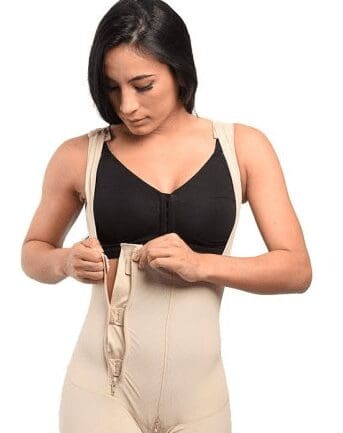
Contour Garment

COMPRESSION GARMENTS

Whether or not you believe the clothes make the man…or woman, or you think that saying is outdated, there is little debate that compression garments improve outcomes after body contouring procedures. Compression, or contour, garments, or fajas, are clothing that is worn after a surgical procedure to help shape and heal the area operated upon. They are made of relatively strong fabric that can generate and maintain a certain amount of tension when worn to improve healing postoperatively. Compression garments provide several benefits, including:

  • Avoidance of fluid accumulation between tissue planes
  • Shaping of the tissue for optimal results
  • Support and comfort of the surgical site

Why Do Compression Garments Work?

The reason that compression garments can help is due to the way in which body contouring procedures, like liposuction, breast reduction, breast lift, tummy tuck, and Brazilian butt lift (or BBL) help shape the body. Each of these procedures creates a flap and/or “lamination,” or layering, of the tissues in some respect. These layers can be associated with “potential space,” or cavities between the tissue that the body tends to fill with fluid, based on the adage that “nature abhors a vacuum.” Therefore, a seroma, or fluid pocket, can accumulate within any space or between layers within the body after surgery. However, if these spaces are compressed, then it is harder for fluid to fill to any significant degree. The body is also prone to heal in the orientation that it is held in after surgery. If, for example, the breast is held in a more rounded and symmetrical orientation with garments, then that is the shape that they are likely to assume post-operatively. Compression garments can thereby both prevent complications and improve results!

What Are Compression Garments?

Compression, or contour, garments are simply clothing that is made from stronger and less distensible material so that it can exert a reasonable amount of force on the tissue to provide shaping and support. After all, the goal of body contouring procedures is to provide improved shape to the abdomen, hips, back, breast, thighs, and neck. The best result for these areas includes using a contour garment, which can refine the definition of any surgery or minimally invasive procedure. Contour, or compression, garments give additional support to the regions of the body that have received a procedure to prevent unwanted fluid accumulation, decreased swelling, or speed up the rate of recovery of these tissues.

What’s the Difference Between Compression Garments and Clothing?

Compression garments fit more snugly and are made from material that can apply greater amounts of pressure than even compressive clothing, like a sports bra. Contour, or compression, garments are made of strong elastic fabric that can be stretched to apply tension when worn properly. There thereby exert a continuous pressure on tissue that would not otherwise be generated by clothing alone.

Are There Different Types of Compression Garments?

 Yes, there are several different types of compression garments. Many companies make compression garments. At Pacific Sound Plastic Surgery, we prefer a well-known brand called Isavella®, but there are many other compression garment companies on the market. Contour garments also differ in what some refer to as “Stage I” and “Stage II” garments. Stage I compression garments refer to greater amounts of compression, which are typically worn in the initial stages of healing, approximately three to six weeks after surgery. Stage II garments, however, mimic more compressive clothing, such as Spanks®, spandex, Under Armor®, or other tight-fitting synthetic clothing. We typically, therefore, recommend that our patients purchase a Stage I compression garment from a higher-end surgical recovery garment company and then either purchase a Stage II garment online or wear compressive clothing.

How Long Do I Have to Wear Compression Garments After Surgery?  

This is the most common question we receive because contour garments can sometimes eventually get uncomfortable. They tend to increase body warmth, sometimes cause chaffing, and some decrease joint mobility a small amount. The short answer is: the longer the better, and the more you wear them the better it will influence your result. We typically suggest that contour garments are worn for at least three weeks for 23-hours a day, and it is best to wear them for six weeks or more. Why 23-hours a day?…because you are of course encouraged to shower and may remove your garment when performing personal hygiene. You will have some improvement in your shape wearing compression garments for the first three months after your procedure. If a compression garment causes chafing, is too hot, or one wants to avoid being seen wearing one, then patients can take a break from wearing them, but the longer they are worn the better. The truth is that compressive garments probably provide benefit all the way to one year postoperative.

If you want to discuss body contouring with Dr. Day, reach out for a consultation! We will employ high grade contour, or compression, garments as well as several other recommendations to achieve your best outcome!